hannah

COPE° Attends the 23rd Session of APHoMSA

COPE° Attends the 23rd Session of APHoMSA

by Eva Lianne Veldkamp

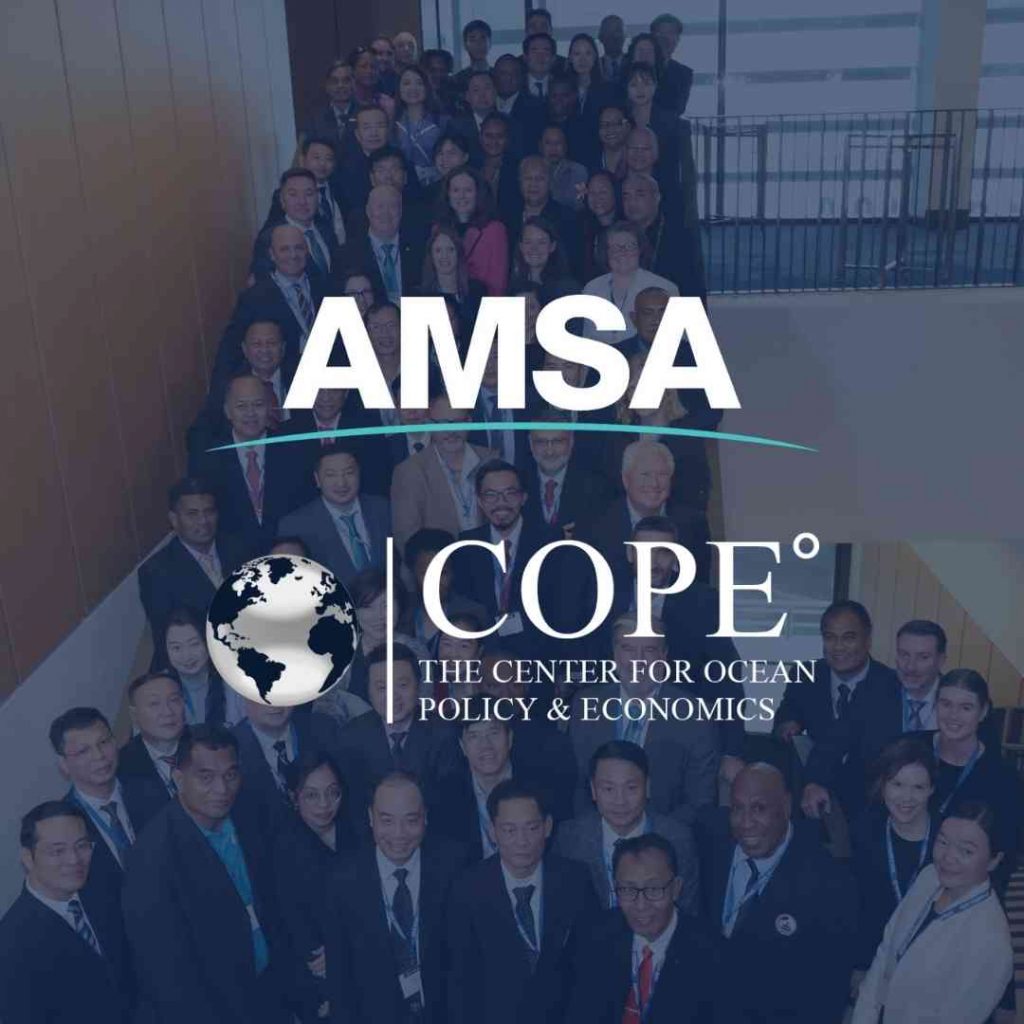
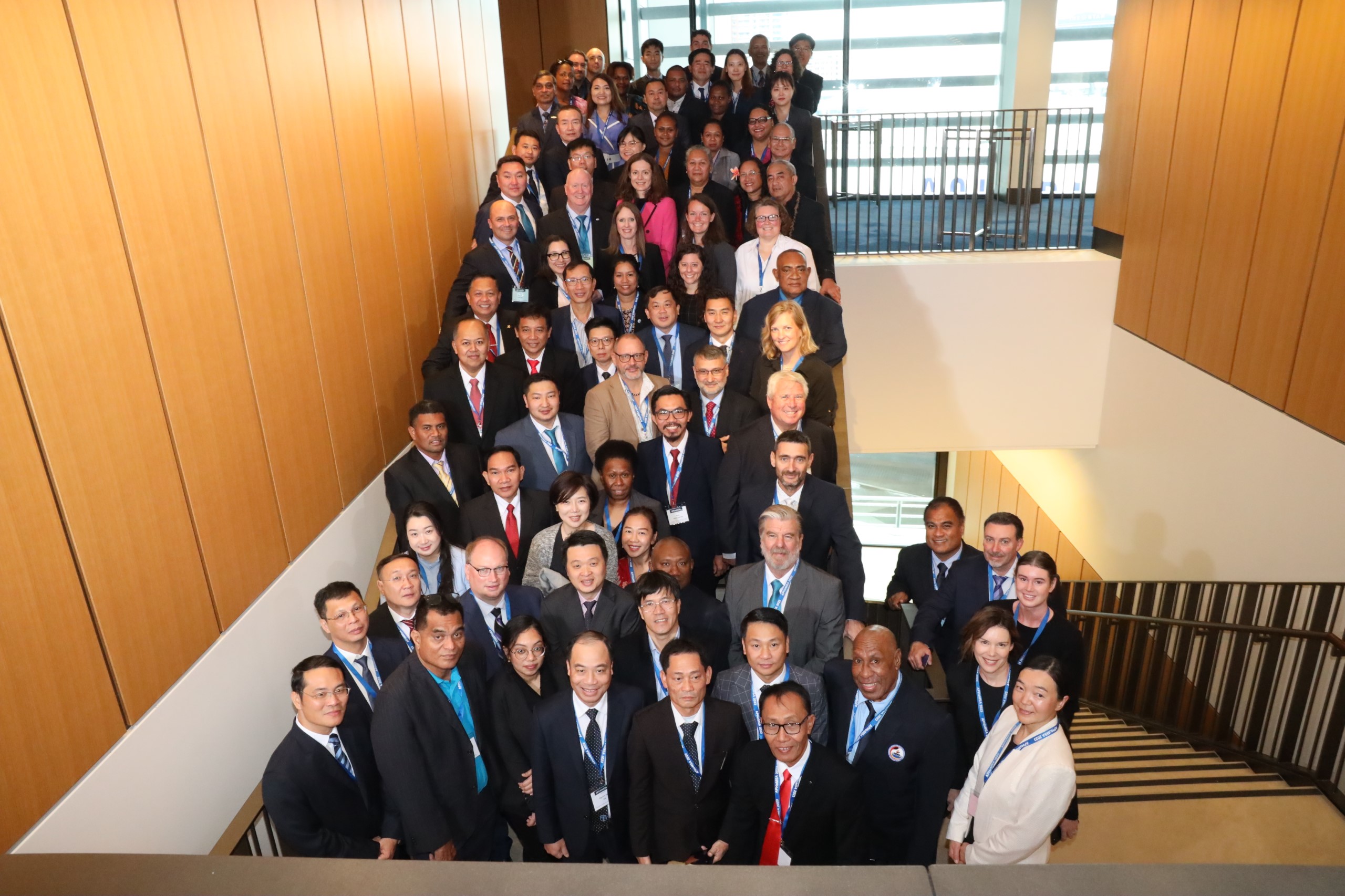
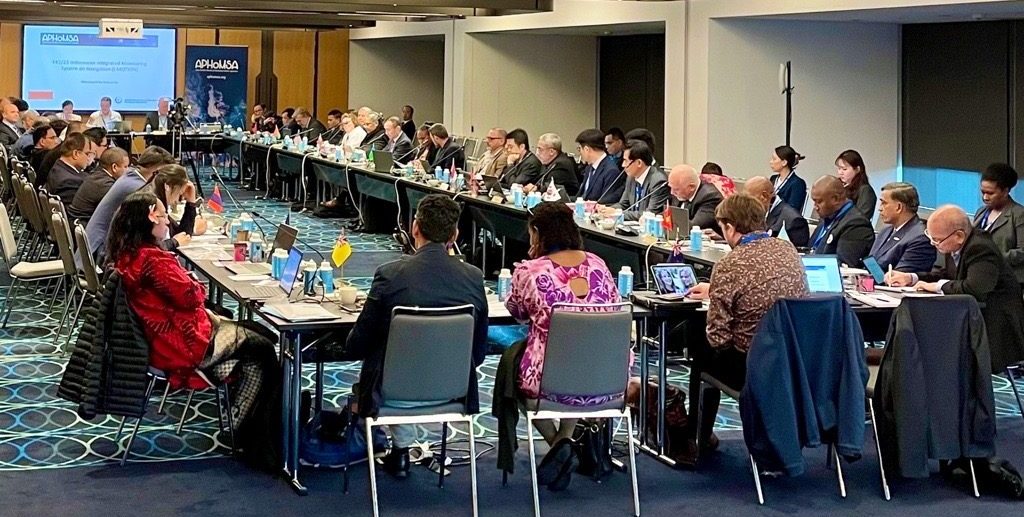
The Center for Ocean Policy & Economics (COPE°) was invited by the Australian Maritime Administration to attend the 23rd session of the Asia-Pacific Heads of Maritime Safety Agencies (APHoMSA) forum, hosted in Sydney, Australia, from 5 to 8 June 2023.

During the forum, 26 countries were represented: Australia, Canada, Chile, China, Cook Islands, Fiji, Indonesia, Japan, Kiribati, Marshall Islands, Mongolia, Nauru, New Caledonia, New Zealand, Niue, Palau, Papua New Guinea, Republic of Korea, Singapore, Samoa, Solomon Islands, Timor Leste, Tonga, United States of America, Vietnam and Vanuatu. Nine observer organisations were also represented: the Asia-Pacific Economic Cooperation Seafarer Excellence Network (APEC SEN); the International Maritime Organization (IMO); the International Hydrographic Organization (IHO); the Regional Cooperation Agreement on Combating Piracy and Armed Robbery against Ships in Asia Information Sharing Centre (ReCAAP ISC); the Pacific Community (SPC); the Tokyo Memorandum of Understanding on Port State Control (Tokyo MoU), the Center for Ocean Policy and Economics (COPE°), the Pacific Islands Maritime Association (PacMA), and the Women’s International Shipping and Trading Association (WISTA Australia).

Covering half of the globe, the Asia-Pacific is the largest maritime region. While the lives and perspectives of people living near the Pacific Ocean is very specific, especially for those living on the many small islands in the Pacific, almost all of the topics that were discussed during the forum were of issues that concern us all.

Throughout the agenda items on ‘Women in Maritime’ and ‘Safety and Wellbeing of Seafarers,’ there was a lot of constructive dialogue on the importance of psychological safety in the maritime sector. The COPE° paper that was submitted to the forum under these agenda items resonated with many other delegations. The negative consequences that people face when simply being their authentic selves in their workplace indicates a lack of psychological safety.

Discussions were had around the need for people to feel safe and confident to speak up, share ideas, give honest feedback and communicate. The COPE° paper pointed out the importance of ‘Allyship’ – using your voice to speak up for others – especially in helping a minority. “When we can make it safe for everyone, we can get the people on board who know what to do, to take care of themselves, each other, the ship and the sea. And build maritime workforce globally, that is safe enough to be inclusive and diverse,” said Eva Lianne Veldkamp of COPE°.

The USA delegation shared information about a campaign to report sexual misconduct in the maritime sector, inviting all members of the forum to aggressively pursue acceptance of reports of sexual harassment and sexual assault (SASH) from mariners. “Barriers to reporting contribute to the problem of SASH because they limit the number of cases of sexual assault and sexual harassment reported to the authorities and allow perpetrators to avoid accountability.” Members of the forum supported and applauded this important campaign and noted the fear of reporting. Not only is there generally a high level of shame and fear that comes with vulnerability, but different cultural, social and personal aspects complicate these issues even further.

Other documents submitted under the ‘Women in Maritime’ agenda item provided useful information and resources, wonderful ideas for improvements and thought provoking suggestions. WISTA Australia submitted an informative paper with valuable resources and toolkits for companies to use to provide diverse and inclusive working environments and teams. Potential solutions to create a working environment that is safe, inclusive, diverse and equal for everyone in maritime have been put forward, especially to address the many challenges faced by women in the industry. To provide potential solutions, it is important to understand the gravity of the problems and challenges within the industry, and to understand that programs and solutions must be implemented with care and oversight.

One delegation of a small Pacific Island shared the experiences of a program that was initiated several years ago to promote maritime careers for women. It enabled three enthusiastic young women to become licensed mariners. Upon completion of their educations, they began work on a cruise ship. Unfortunately, the program turned out to be a tragedy. Two of the three women returned home pregnant and alone, with the third committing suicide. The program was terminated immediately.

The tragic story emphasizes the lack of, and need for, psychological safety on board ships and in the maritime sector. The COPE° paper noted that the absence of psychological safety is a root cause of bullying, assault and harassment in the maritime sector, including sexual assault and sexual harassment. It describes that feeling unsafe within one’s workplace is an invisible and underrated safety issue, and is something that has become normalized in the maritime sector and on board ships.

Discussions were also had about the need for mandatory training provisions on these issues, noting the great work that already has been taken forward by IMO as part of the comprehensive review of the STCW Convention and Code. There was also agreement amongst delegations to work on establishing international mechanisms, policies and measures to respond to, and resolve, cases of abuse, bullying and SASH.

In general, an optimistic understanding amongst all delegations indicated that there is a great willingness to use the severe challenges faced as opportunities for improvement. The forum decided to set up a correspondence group to work on agreements requiring action. In the upcoming period, this group is going to work on setting up a strategic plan on promoting women in maritime, developing leadership programs, creating a survey questionnaire to collect data on gender based issues on board of ships and on obtaining funding.

To summarize discussions under the agenda item of ‘Women in Maritime,’ Mr. Mick Kinley – CEO of the Australian Maritime Administration and Chair of the forum stated: “I think that we can all conclude to agree that psychological safety should be a basic human right.”

Another item on the agenda of the forum was ‘Marine Environment Protection and Maritime Incident response.’ There were several requests for cooperation and lessons learned shared by members of the forum. A number of marine incidents and SAR experiences were also shared and discussed. Several governments shared experiences and there was a great willingness for further collaboration across the Asia-Pacific.

Small Pacific Islands shared information about marine incidents which resulted in marine pollution. A big concern that was expressed was the lack of capacity to prosecute and compensate liability, clean up after pollution, remove wrecks and establish costs for use of assets needed to solve disasters. Statements were made about the need to hold shipowners and the maritime industry responsible for the damage on the ocean and the environment. Discussions were had around the idea that by making insurance costs public, those figures could provide helpful insight into the importance of investing to prevent incidents and marine disasters.

IMO shared information on the development of a new program and training course on marine incident investigations, which will be based on the work that is done by the relevant sub-committee (III) and the reports that are submitted by IMO Member States to GSIS. Australia noted a paper that was submitted to the IMO Legal Committee about updating liability limits in this regard, which seems to have received little support until now.

The forum provided a space for delegations to share information on sustainability development planning and the implications this has on maritime safety. Arrangements for vessel traffic services, aids of navigation and cooperation with government bodies to ensure safe and secure maritime traffic were also topics that made for engaging discussions. Offshore wind parks and other offshore developments such as seaweed farming and space launch operations require specific solutions that have yet to be discovered. Several delegations expressed a big need for information on how to handle situations at sea regarding innovative developments. Countries such as the USA, New Zealand, Canada and Australia are generally looking to Europe, as they have much experience with windfarms at sea.

New fuels were part of these discussions as well. China made an important remark about the safety issues and requirements regarding the use and carriage of large batteries on board ships. They requested IMO to notice these new and developing technologies, and update the conventions and regulations that are relevant to these new innovations accordingly as part of the review that already takes place. China stated that it will be necessary to establish new training requirements, safety inspections requirements and other provisions regarding the usage and carriage of batteries, new fuels or other innovative means in the near future.

The forum was very useful in regards to ‘Regional Cooperation.’ Discussions were had about the progress of the establishment of an IMO Regional Presence Office in the Pacific Islands region. The need for greater technical cooperation and an increase in the delivery of technical assistance was an important point of these discussions.

The importance of training, lecturing, coaching future maritime leaders and mariners and the need for assistance and cooperation was also expressed by several delegations. An challenge shared by many delegations is that of providing global on-board training to foster competent young seafarers. The pacific region has very bright and kind seafarers, but is currently unable to get them sea time on board international vessels.

By Eva Lianne Veldkamp

The Center for Ocean Policy & Economics (COPE°) was invited by the Australian Maritime Administration to attend the 23rd session of the Asia-Pacific Heads of Maritime Safety Agencies (APHoMSA) forum, hosted in Sydney, Australia, from 5 to 8 June 2023. The meeting was attended by Eva Lianne Veldkamp, who is currently leading a COPE working group on psychological safety, bullying and SASH in the maritime sector.

During the forum, 26 countries were represented: Australia, Canada, Chile, China, Cook Islands, Fiji, Indonesia, Japan, Kiribati, Marshall Islands, Mongolia, Nauru, New Caledonia, New Zealand, Niue, Palau, Papua New Guinea, Republic of Korea, Singapore, Samoa, Solomon Islands, Timor Leste, Tonga, United States of America, Vietnam and Vanuatu. Nine observer organisations were also represented: the Asia-Pacific Economic Cooperation Seafarer Excellence Network (APEC SEN); the International Maritime Organization (IMO); the International Hydrographic Organization (IHO); the Regional Cooperation Agreement on Combating Piracy and Armed Robbery against Ships in Asia Information Sharing Centre (ReCAAP ISC); the Pacific Community (SPC); the Tokyo Memorandum of Understanding on Port State Control (Tokyo MoU), the Center for Ocean Policy and Economics (COPE), the Pacific Islands Maritime Association (PacMA), and the Women’s International Shipping and Trading Association (WISTA Australia).

“It was truly special to be around so many maritime leaders from around the Pacific Ocean,” said Eva Lianne. “To have the opportunity to come together to talk and connect with people that carry responsibility to protect the ocean and the safety of people.”

Covering half of the globe, the Asia-Pacific is the largest maritime region. While the lives and perspectives of people living near the Pacific Ocean is very specific, especially for those living on the many small islands in the Pacific, almost all of the topics that were discussed during the forum were of issues that concern us all.

Throughout the agenda items on ‘Women in Maritime’ and ‘Safety and Wellbeing of Seafarers,’ there was a lot of constructive dialogue on the importance of psychological safety in the maritime sector. The COPE° paper that was submitted to the forum under these agenda items resonated with many other delegations. The negative consequences that people face when simply being their authentic selves in their workplace indicates a lack of psychological safety.

In her introduction statement, Eva expressed that all people should feel safe and confident to speak up, share ideas, give honest feedback and communicate. “Even in a hierarchical setting like we have on board, this should be normalized. Even making a simple comment about working clothes that don’t fit properly on a female body, is sometimes hard to express. Let alone speaking up about much more vulnerable and sensitive things like bullying and SASH.” The COPE° paper pointed out the importance of ‘Allyship’ – using your voice to speak up for others – especially in helping a minority. “When we can make it safe for everyone, we can get the people on board who know what to do, to take care of themselves, each other, the ship and the sea. And build maritime workforce globally, that is safe enough to be inclusive and diverse.”

The USA delegation shared information about a campaign to report sexual misconduct in the maritime sector, inviting all members of the forum to aggressively pursue acceptance of reports of sexual harassment and sexual assault (SASH) from mariners. “Barriers to reporting contribute to the problem of SASH because they limit the number of cases of sexual assault and sexual harassment reported to the authorities and allow perpetrators to avoid accountability.” Members of the forum supported and applauded this important campaign and noted the fear of reporting. Not only is there generally a high level of shame and fear that comes with vulnerability, but different cultural, social and personal aspects complicate these issues even further.

Other documents submitted under the ‘Women in Maritime’ agenda item provided useful information and resources, wonderful ideas for improvements and thought provoking suggestions. WISTA Australia submitted an informative paper with valuable resources and toolkits for companies to use to provide diverse and inclusive working environments and teams. Potential solutions to create a working environment that is safe, inclusive, diverse and equal for everyone in maritime have been put forward, especially to address the many challenges faced by women in the industry. To provide potential solutions, it is important to understand the gravity of the problems and challenges within the industry, and to understand that programs and solutions must be implemented with care and oversight.

One delegation of a small Pacific Island shared the experiences of a program that was initiated several years ago to promote maritime careers for women. It enabled three enthusiastic young women to become licensed mariners. Upon completion of their educations, they began work on a cruise ship. Unfortunately, the program turned out to be a tragedy. Two of the three women returned home pregnant and alone, with the third committing suicide. The program was terminated immediately.

“This severely mournful story indicates what is currently is lacking in many teams and organizations, including those on board of ships and in maritime sector: psychological safety,” Eva pointed out in response. The COPE° paper noted that the absence of psychological safety is a root cause of bullying, assault and harassment in the maritime sector, including sexual assault and sexual harassment. It describes that feeling unsafe within one’s workplace is an invisible and underrated safety issue, and is something that has become normalized in the maritime sector and on board ships.

Discussions were also had about the need for mandatory training provisions on these issues, noting the great work that already has been taken forward by IMO as part of the comprehensive review of the STCW Convention and Code. There was also agreement amongst delegations to work on establishing international mechanisms, policies and measures to respond to, and resolve, cases of abuse, bullying and SASH.

Eva shared an interesting observation. “Several people pointed out that currently many ships are old, outdated and not safe to work on in general. It was also noted that many seafarers are in need of secure employment contracts that will hold and protect their needs and interests.”

In general, an optimistic understanding amongst all delegations indicated that there is a great willingness to use the severe challenges faced as opportunities for improvement. The forum decided to set up a correspondence group to work on agreements requiring action. In the upcoming period, this group is going to work on setting up a strategic plan on promoting women in maritime, developing leadership programs, creating a survey questionnaire to collect data on gender based issues on board of ships and on obtaining funding.

To summarize discussions under the agenda item of ‘Women in Maritime,’ Mr. Mick Kinley – CEO of the Australian Maritime Administration and Chair of the forum stated: “I think that we can all conclude to agree that psychological safety should be a basic human right.”

Another item on the agenda of the forum was ‘Marine Environment Protection and Maritime Incident response.’ There were several requests for cooperation and lessons learned shared by members of the forum. A number of marine incidents and SAR experiences were also shared and discussed. “It was very interesting to observe how governments and authorities around the Pacific are working together to keep the ocean clean and safe,” Eva noted. Several governments shared experiences and there was a great willingness for further collaboration across the Asia-Pacific.

Small Pacific Islands shared information about marine incidents which resulted in marine pollution. A big concern that was expressed was the lack of capacity to prosecute and compensate liability, clean up after pollution, remove wrecks and establish costs for use of assets needed to solve disasters. Statements were made about the need to hold shipowners and the maritime industry responsible for the damage on the ocean and the environment. “Insurers keep the total cost a secret, but this would provide a good insight on the importance of investing in prevention of incidents and marine disasters.”

IMO shared information on the development of a new program and training course on marine incident investigations, which will be based on the work that is done by the relevant sub-committee (III) and the reports that are submitted by IMO Member States to GSIS. Australia noted a paper that was submitted to the IMO Legal Committee about updating liability limits in this regard, which seems to have received little support until now.

Lastly, Eva noted that the cause of the marine incidents had to do with a lack of understanding and/or feeling of responsibility from the people working on the bridge. “This is an important observation, together with the earlier conclusion that many working environments on board of ships are not psychologically safe.”

The forum provided a space for delegations to share information on sustainability development planning and the implications this has on maritime safety. Arrangements for vessel traffic services, aids of navigation and cooperation with government bodies to ensure safe and secure maritime traffic were also topics that made for engaging discussions. Offshore wind parks and other offshore developments such as seaweed farming and space launch operations require specific solutions that have yet to be discovered. Several delegations expressed a big need for information on how to handle situations at sea regarding innovative developments. Countries such as the USA, New Zealand, Canada and Australia are generally looking to Europe, as they have much experience with windfarms at sea.

New fuels were part of these discussions as well. China made an important remark about the safety issues and requirements regarding the use and carriage of large batteries on board ships. They requested IMO to notice these new and developing technologies, and update the conventions and regulations that are relevant to these new innovations accordingly as part of the review that already takes place. China stated that it will be necessary to establish new training requirements, safety inspections requirements and other provisions regarding the usage and carriage of batteries, new fuels or other innovative means in the near future.

The forum was very useful in regards to ‘Regional Cooperation.’ Discussions were had about the progress of the establishment of an IMO Regional Presence Office in the Pacific Islands region. The need for greater technical cooperation and an increase in the delivery of technical assistance was an important point of these discussions.

The importance of training, lecturing, coaching future maritime leaders and mariners and the need for assistance and cooperation was also expressed by several delegations. An challenge shared by many delegations is that of providing global on-board training to foster competent young seafarers. The pacific region has very bright and kind seafarers, but is currently unable to get them sea time on board international vessels.

Eva invited all countries and organizations to join the Center for Ocean Policy & Economics (COPE°) and influence change together. COPE° provides a safe, digital platform for people to come together as a community to work to find salient solutions and action change. Learn more about COPE° at www.thecope.org.

30 May Meeting – COPE° Working group on Psychological Safety and Sexual Assault and Harassment in the Maritime Sector

Meeting Minutes: COPE° Working group on Psychological Safety and Sexual Assault and Harassment in the Maritime Sector

TUES, 30 MAY 2023 | 7:00 AM EST

1) Welcome and Introduction

Everyone is invited to introduce themselves, and/or connect to each other.

New system for taking on new members to our group: People and stakeholders who are interested in our group and wish to join meetings, are welcomed at all times. Membership to COPE° is open to everyone. We aim to be an inclusive, open and diverse group.

2) Sub-group on psychological safety | PS Group

Leader: Jillian Carson-Jackson

Eva provides a summary of the work and proceedings of the PS Group.

Goal: A short and essential free NEMO° course for all people to understand the basics of psychological safety, and how to report, prevent and address bullying and SASH. Grasp attention of people, and make them curious to learn more.

Structure of the NEMO course:
Part 1: Psychological Safety
General information, teams/leadership, effects on health
Part 2: Bullying and SASH
Case studies, using video’s and interactive NEMO° features

Notes:

  • Time concerns on assessments and ‘Role play’ sections of course. Implementation will mean more time dedication.
  • Advices to be very aware on putting required safeguarding procedures in place. Certainly, with regards to role-playing and case studies and the impact this can have on (mental) health of participants.
  • The idea is that we provide a definition of bullying and sash, and show people examples by means of case studies. We will use video’s and played out short and simple scenarios in the features the NEMO° platform provides. The idea is to focus on the different roles of people, for example observers. And show people how different options for behavior are available.
  • Strongly advices to keep in mind: “do no harm”. A lot of feelings, triggers can come up while doing these training. Advices to put disclaimers in all sections, provide options for people to take health care. Find out what is ethical, what is legal. Especially in the USA.

3) Sub-group on data collection and harmonization | Data Group

Leader: TBD (volunteers are welcomed to respond)

  • Update the literature and resources list
  • Create a safe data/governance structure
    • Update the COPE° website with a resource database
    • How do we create a data consortium, to start dialogue, sharing ideas and views
  • Follow up about possible interviews amongst IMU members to ask whether there is a need for education with regards to psychological safety and DEIA relating matters.

4) Sub-group on reporting mechanisms and accountability | Rm&A Group

Leader: TBD (volunteers are welcomed to respond)

  • ISM Code and IMO work
    • Focus on responsibility and accountability of flagstates, maritime authorities, companies, etc.
    • Proposal to IMO for statistics.
  • What are the different reporting mechanisms that are used right now?
  • Effect of Pinkwashing/marketing (Global maritime forum)

Notes:

  • Is there a focus on third parties, like seaman’s missions? (Eva: yes definitely. And everyone is invited to collaborate)
  • Focusing on international as well as regional groups, and available resources, information. ISWAN is been tasked to pull together a list of different places of reporting. Welfare work also involves reporting sometimes.
  • Question: ISWAN is searching for help to put together a list of organizations that are receiving reports of people that work at sea. Including when this is a by-products of giving welfare/emotional support. To get an understanding of what organizations there are, and explore how wide spread the information is. And paint a picture of what is going on.
  • Front line service, seafarer centers, welfare work, are receiving information of cases of bullying and sash. But the difficult thing is the limit in information that is available for people to get help and support. Also the access to this information is a challenge.
  • Found out about helpline of maritime female organization in Germany. Will ask them to forward information to Georgia.
  • Leadership challenge. Advices to find solutions that will be helpful, such as dual leadership, or task people with roles for each group. To make the work accessable and workable for everyone.

Conclusion: We will use all of the above discussion, and previous discussions in the two sub-groups 3 and 4. These two sub-groups can be planned in, and coordinated in the same way as the PS group. By sectioning and tasking people with smaller sections of the work.

5) Maritime Matters Podcast (sub group awareness) | Podcast Group

One episode every 2 week

  • Set up template/look
  • Decide on subjects and topics. Address needs from audience.
  • We are looking for hosts (6 – 8 persons) who would like to run their own show.
  • Set up schedule
  • Marketing and feedback
  • Determine the needs of podcasts. What do people want to hear, and what is needed to raise awareness.

6) Any other Business

Other presentations and invitations

  • We were invited by AMSA who will host the Asia Pacific Head of Maritime Safety Agencies (APHoMSA) forum, from 5 to 9 June 2023 in Sydney
  • Information on the International Symposium of Maritime Health (ISMH16) https://ismh16.gr/ that is going to take place in ATH 5-8 October 2023 in Athens, Greece. This is a global conference on maritime health. Everyone interested is invited to react/share/connect.
  • Webinar this Friday June 2nd from the Professional Yachting Association (PYA). Diving into the role of flag-states, and providing more information to people. Also discussing bullying and harassment on board of ships and yachts. Getting people off the fear of reporting.
    • Please find the link to join and register HERE

Planning Schedule and Recurrence

Main meetings: around every 8 weeks
Sub-group meetings: around every 4 weeks or more often depending on the urgency.

The next meeting of the main group is planned on Tuesday 18 July 2023 at 11.00 UTC.

ANNEX A
List of Members and Participants

The members and participants of the COPE° Working group on Bullying, Psychological Safety and Sexual Assault and Harassment in the Maritime Sector can be found in the Position Paper HERE.

ANNEX B
Terms of Reference

The COPE° Working group on Psychological Safety and Sexual Assault and Harassment in the Maritime Sector is hosted by Center for Ocean Policy and Economics, a subset of The Northeast Maritime Institute – College of Maritime Science. COPE° facilitates committed maritime government, non-government, corporate, education, science and technology experts and partners to collaborate and create drivers for change. Members of the working group will be sharing information, ideas, learnings and pooling resources in order to work on:

  1. developing and delivering relevant actions and impactful solutions
  2. drivers for change, in order to tackle the wicked problems present in our world today
  3. solutions to build on an international UN framework to connect the industry to objectives.

The work the COPE° working group will be driven by ethical and humanitarian based values, taking into account:

  1. building on a psychologically safe workplace culture in the maritime sector
  2. the successful integration of vulnerable and marginalized groups, in support of diversity, equality, equity, inclusion and acceptance
  3. the issues relating to sexual assault, harassment and bullying in the maritime sector
  4. transparency and integrity
  5. supporting and honoring mariners globally

4 April Meeting – COPE° Working group on Psychological Safety and Sexual Assault and Harassment in the Maritime Sector

Meeting Minutes: COPE° Working group on Psychological Safety and Sexual Assault and Harassment in the Maritime Sector

TUES, 4 APRIL 2023 | 7:00 AM EST

1) Welcome and Introduction

Proposed new members.

There were no objections to the submission of these new members, therefore everyone is very much welcomed to participate and to become a member of the COPE° working group.

New Agenda
Since the group is growing, the need for structure is increasing. That is why we wish to propose the following agenda:

Proposed Agenda for Main COPE WG

  1. New members
  2. Sub-group on psychological safety | PS Group
  3. Sub-group on data collection and harmonization | Data Group
  4. Sub-group on reporting mechanisms and accountability | Rm&A Group
  5. Podcast Maritime Matters (sub group awareness) | Podcast Group
  6. Any other Business
    1. Presentations and invitations
    2. Planning schedule

We invite members to communicate suggestions to this proposed agenda. Either during this meeting, or by email. Any suggested edits or amendments will be discussed in the next meeting of the main group.

To arrange management and structure of the work of the sub-groups, we discussed the basics as described below. Everyone is invited to comment, either during the meeting or at a later stage through email.

We decided that a form will be drafted to allow people to volunteer and subscribe to a certain sub-group.

We will provide information in order to clarify the tasks and role of the group-leaders. That will be shared with members and published on the COPE° website.

2) Sub-group on psychological safety | PS Group

Leader: Jillian Carson-Jackson

  • Psychological safety course NEMO°
    • Course template
    • Competence used at IMO
    • Task people – deadlines
  • Sharing

To keep in mind:

  • Determine what the PS course will cover exactly. Should provide information for all seafarers on the ship, and maritime professionals. Shore based personnel, ISM related people who are working at relevant authorities, etc.
  • Course objectives will clarify information such as audience, anticipated outcomes and be discussed and decided upon.

3) Sub-group on data collection and harmonization | Data Group

Leader: TBD (volunteers are welcomed to respond)

  • Update the literature and resources list
  • Create a safe data/governance structure
  • Update the COPE° website with a resource database
  • How do we create a data consortium, to start dialogue, sharing ideas and views
  • Follow up about possible interviews amongst IMU members to ask whether there is a need for education with regards to psychological safety and DEIA relating matters.

4) Sub-group on reporting mechanisms and accountability | Rm&A Group

Leader: TBD (volunteers are welcomed to respond)

  • ISM Code and IMO work
    • Focus on responsibility and accountability of flagstates, maritime authorities, companies, etc.
    • Proposal to IMO for statistics.
  • What are the different reporting mechanisms that are used right now?
  • Effect of Pinkwashing/marketing

5) Maritime Matters Podcast (sub group awareness) | Podcast Group

One episode every 2 weeks

  • Set up template/look
  • Decide on subjects and topics. Address needs from audience.
  • We are looking for hosts (6 – 8 persons) who would like to run their own show. Volunteers are welcomed to respond.
  • Set up schedule
  • Marketing and feedback

To keep in mind:

  • Determine the needs of podcasts: what do people want to hear and what is needed to raise awareness?

6) Any other Business

  • Member shared a recent paper from the seafarers international research center in Cardiff (Link to Paper)
  • Discussions regarding a lack of support that is reported.
    • Reporting of people who feel safe to speak up. Trying to get women seafarers to respond to surveys, to gain feedback. Poor numbers in response, maybe we can help raise it? How can we reach people globally.
    • People need to feel comfortable to speak. Company responses to people who are reporting. Shoreside personnel need to know language as to how to handle, training courses about this?
    • note to be aware of the fact that when you reach out to women only, you might create a gender-violent response. We should reach out to people (not just women).

Presentations and Invitations

  • International Women in Maritime Conference (18 and 19 May 2023)
    • (we did not receive any invites, any ideas are welcomed)
  • We were invited by AMSA who will host the Asia Pacific Head of Maritime Safety Agencies (APHoMSA) forum, from 5 to 9 June 2023 in Sydney

Additional information that was shared by Eric Dawicki after the meeting ended:

In order to maintain the original strategy of COPE° to always remain inclusive and ensure an easy sense of self and participation for people and stakeholders , we would like to propose to change the system we been using regarding taking on new members to our group:

  • People and stakeholders who are interested in our group and wish to join meetings, should be welcomed at all times.  Membership to COPE° is open to everyone, but when a new member wants to join a working group, we will review their request and qualify them as wither an observer or an active participant in a working group. Once qualified regarding their membership interests, we shall formally introduce them to a working group warmly, kindly and with full support. This way we maintain the inclusive, open and diverse nature of our group. It also and also prevents exclusion and unnecessary formality/bureaucracy.
  • In the upcoming weeks, we will share information with ‘rules for engagement’, so that when people wish to cooperate and participate further into the work, they will have a basic outline and idea of what is expected.

The Center for Ocean Policy and Economics is currently finalizing these documents, that information will be shared with everyone and provided on the COPE° website as well.

Planning Schedule and Recurrence

We will prepare a spreadsheet with an overview of meetings. With a prospect to plan meetings periodically, so the sub-groups can report back to the main group and share/collect ideas. It should be noted that it covers different time-zones, and that people are able to join several groups.

The spreadsheet COPE WG planner is shared with this meeting minutes. The document is going to be finalized in the upcoming week, and will be provided to you as well.

  • Main meetings: around every 8 weeks
  • Sub-group meetings: around every 4 weeks or more often depending on the urgency.

The next meeting of the main group is planned on Tuesday 30 May 2023 at 11.00 UTC.

ANNEX A
List of Members and Participants

The members and participants of the COPE° Working group on Bullying, Psychological Safety and Sexual Assault and Harassment in the Maritime Sector can be found in the Position Paper HERE.

ANNEX B
Terms of Reference

The COPE° Working group on Psychological Safety and Sexual Assault and Harassment in the Maritime Sector is hosted by Center for Ocean Policy and Economics, a subset of The Northeast Maritime Institute – College of Maritime Science. COPE° facilitates committed maritime government, non-government, corporate, education, science and technology experts and partners to collaborate and create drivers for change. Members of the working group will be sharing information, ideas, learnings and pooling resources in order to work on:

  1. developing and delivering relevant actions and impactful solutions
  2. drivers for change, in order to tackle the wicked problems present in our world today
  3. solutions to build on an international UN framework to connect the industry to objectives.

The work the COPE° working group will be driven by ethical and humanitarian based values, taking into account:

  1. building on a psychologically safe workplace culture in the maritime sector
  2. the successful integration of vulnerable and marginalized groups, in support of diversity, equality, equity, inclusion and acceptance
  3. the issues relating to sexual assault, harassment and bullying in the maritime sector
  4. transparency and integrity
  5. supporting and honoring mariners globally

Criminalization of Mariners

Criminalization of Mariners

By Eric R. Dawicki

It’s time to start talking about the demonizing and criminalization of professional mariners.

Seafaring is one of the oldest professions in the world, dating back to ancient times. It is an industry that is vital to the global economy, with approximately 90% of the world’s trade transported by sea. Despite its importance, the profession of mariners and seafarers is often overlooked, and their working conditions are often challenging and hazardous. Moreover, the criminalization of professional mariners and seafarers is becoming an increasingly significant concern, with many facing unjustified prosecution and imprisonment.

The criminalization of seafarers can occur in different ways. Firstly, some seafarers can be accused of criminal offenses that are not directly related to their job but occurred while on board, such as drug smuggling or piracy. Secondly, some seafarers can face criminal charges for accidents or incidents that occur while performing their duties, such as collisions, groundings, or oil spills. Lastly, some seafarers can be criminalized due to non-compliance with regulations or maritime laws.

The ambiguity in criminalizing professional mariners and seafarers is a significant challenge. It is often unclear who is responsible for enforcing maritime law, and in many cases, criminalization is based on vague or outdated regulations. As a result, innocent seafarers are subjected to unjustified prosecution and imprisonment, which can have a significant impact on their lives and livelihoods. The criminalization of seafarers can also have negative consequences for the shipping industry as a whole, as it can discourage people from pursuing careers in the field.

The criminalization of seafarers can lead to various issues. Firstly, it can lead to a lack of trust between seafarers and the authorities, which can result in seafarers being hesitant to report incidents or accidents. This can have significant safety implications, as it can prevent authorities from identifying potential safety risks and taking appropriate action to mitigate them. Secondly, it can result in seafarers being treated unfairly and subjected to harsher penalties than they deserve. This can have a significant impact on their mental health and well-being, as well as their ability to find employment in the future. Lastly, the criminalization of seafarers can discourage people from pursuing careers in the industry, which can lead to a shortage of skilled labor and negatively affect the shipping industry’s performance.

The criminalization of professional mariners and seafarers is a complex and multi-faceted issue that requires attention from all stakeholders. Governments, industry bodies, and international organizations need to work together to create a clear framework for enforcing maritime law and ensure that seafarers are not subjected to unjustified prosecution and imprisonment. This can be achieved by updating and modernizing outdated regulations, providing seafarers with adequate training and support, and promoting a culture of safety and transparency in the shipping industry. By doing so, we can ensure that seafarers are treated fairly and that the shipping industry can continue to thrive in the future.

14 February Meeting – COPE° Working group on Psychological Safety and Sexual Assault and Harassment in the Maritime Sector

Meeting Minutes: COPE° Working group on Psychological Safety and Sexual Assault and Harassment in the Maritime Sector

TUES, 14 FEBRUARY 2023 | 7:00 AM EST

1) Welcome and Introduction

Proposed new members.

There were no objections to the submission of these new members, therefore everyone is very much welcomed to participate and to become a member of the COPE° working group.

2) Activities and Scope of Work

a) Review and amend existing IMO Model Course 1.21 PSSR & Evaluate and provide training options

The IMO Sub- committee on Human Element Training and Watchkeeping – HTW9 took place from 6 February to 10 February in London.

Eva provided a summary of what happened that week. And provided updates regarding the following:

Summary of HTW9
The tenth session of the HTW Sub-Committee took place form 6-10 February 2023. For this session, three documents were submitted with proposals on training provisions on psychological safety, bullying and SASH. A document from South Korea contained ‘a review of the amendment to the STCW Convention: provisions on human rights training including bullying, sexual assault and harassment prevention’. A document submitted by the USA proposed ‘mandatory training provisions to address the prevention, awareness, bystander intervention, reporting and response to bullying and harassment including sexual assault and sexual harassment’.

And the document our group worked on: a document submitted by Dominica, Bahamas, Brazil, Kenya, Saudi Arabia, South Africa, Türkiye, Viet Nam, Abuja MoU, OCIMF, IFSMA, InterManager, IMHA and WISTA International proposed training provisions on psychological safety addressing bullying, sexual assault and harassment in the maritime sector. Document HTW9/7/8, proposed amendments to the STCW Code, table A-VI/1-4, provided in annex 1 to the document. The document also highlighted the critical issue of training provisions on psychological safety, to address bullying and sexual assault and harassment in the maritime sector.

The amendments focused on including specific content to establish appropriate maritime workplace behavioral norms and essential human elements of overall psychological safety on board vessels and, indeed, in all aspects of the maritime industry.

The initiative was taken after the publication of some of the worst reports on human rights violations at sea that our industry has learned about in decades. It brought to light the tip of the iceberg, a wicked problem, that is invisible for most and seems to be normalized within the maritime sector and on board of ships: a trend that demonstrates a serious lack of psychological safety.

Improving education, knowledge and understanding on psychological safety has an immediate effect on seafarers’ mental and physical well-being. This will, in turn, augment onboard operational safety, security and environmental protection.

What was agreed upon during the HTW9 Sub-Committee:
(conclusions from the final report of the meeting)

  • The inclusion of new competencies for all seafarers relating to bullying and harassment, including SASH, under table A-VI/1-4 of the STCW Code, should be prioritized at this session and would form the legal basis for a revision of Model Course 1.21. At a later stage during the comprehensive review of the STCW Convention and Code, other related matters could be addressed.
  • Taking into account that short-term educational interventions might not be able to change attitude and behavior, consideration should be given, at a later stage, to the need for amending the ISM Code to require companies to address bullying and harassment, including SASH, under their Safety Management Systems, as well as other instruments such as the FAL Convention.
  • In order to have the amendments adopted at MSC 108 (May 2024), the amendments needed to be approved at MSC 107 (June 2023). Noting that JTWG, which was scheduled to be held at the end of 2023, was planned to consider this matter, as instructed by MSC 105. In this connection, MSC 107 should be requested to authorize JTWG to send their comments directly to MSC 108. Another option would be to have the comments of JTWG considered at HTW 10 (February 2024), after which HTW 10 would report to MSC 108.

Proposals and decisions during plenary on Friday (still to be included in the final report of HTW9).

Since the importance and priority of the matter, the sub-committee decided to set up an informal, intersessional drafting group/correspondence group. This group is going to work on providing the new competences on psychological safety, as part of the comprehensive review of the STCW for submission to HTW10. (Chair: Sweden). The amendments need to be approved at MSC 108 (May 2024) and adopted at MSC 109.

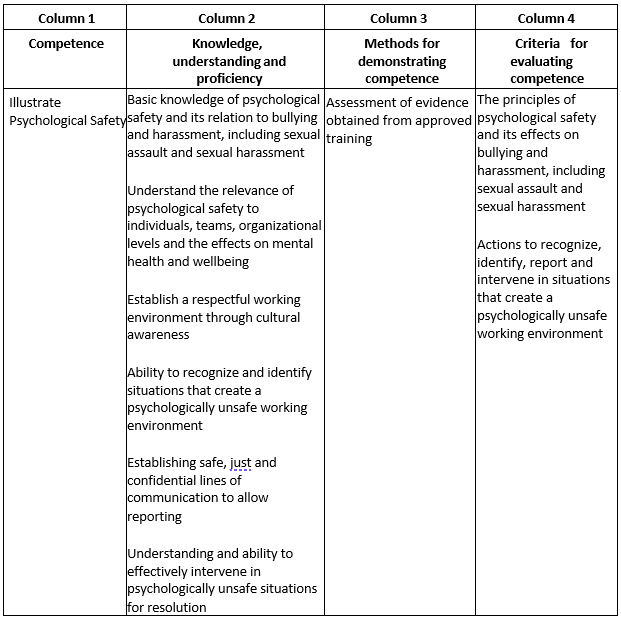
During the HTW9 Working Group that worked on the amendments of the STCW Code, table A-VI/1-4, it was decided a new and separate competence should be developed on psychological safety specifically. The first draft for this work is shared below, for your information:

Table A-VI/1-4

Specification of minimum standard of competence in personal safety and social responsibilities

NEMO° Psychological Safety course
The work we did last year, amending Model Course 1.21 on PSSR can be used as a basis for further work and developing training material. Which will be freely available for all.

We will start building curriculum on NEMO° Psychological Safety course. Goal is to focus on psychological safety, bullying and SASH build course around these subjects, (use additional time suggested).

  1. Formulate outcomes and objectives. Material and documents to formulate.
  2. Set up and share the NEMO° course template.
  3. Build the course and work collectively.
  4. Test course with students, provide it on NEMO°.

We will move this work into a new sub-group.
Everyone who is willing to contribute or participate in this work is kindly invited.

IMO = International Maritime Organization
ILO = International Labour Organization
HTW = Human element Training and Watchkeeping
JTWG = Joint ILO/IMO Working Group
STCW = Standards of Training Certification and Watchkeeping
ISM Code = International Safety Management Code
FAL = Facilitation Committee
PSSR = Personal Safety and Social Responsibility

b) Awareness and response

Output and information from the group, that is relevant for mariners and other maritime professionals, will be shared online by means of different channels. The working group will be open to hear the voice of the industry and take information into consideration.

The next The COPE° Podcast episode will be recorded and posted, so it will become a bit more structured and have a more professional look & feel.

  • Please find all previous episodes, including the new ones, HERE.
  • Everyone is welcomed and invited to participate in these podcasts.
  • Nancy Karigithu will be on the next podcast episode with us.
  • MIWB students from Welmoed her class, reviewed the podcast episodes and had some great feedback.
  • Hannah and Eva will work on developing and improving the podcast. We will transfer it to the Maritime Matters Podcast, provide more structure and make it look more professional.
  • Students from Gillian’s class will also review the podcast episodes.

c) Data Collection, Output and Harmonization

Next meeting of this sub-group will be planned in March 2023, we will follow up with tasks and actions discussed in the previous meeting of this sub-group:

Tasks and actions:

  1. Create a safe data/governance structure.
  2. Everyone is invited to update the literature and resources list.
  3. Update the COPE° website with a resource database.
  4. How do we create a data consortium, start dialogue, sharing ideas and views.
  5. Follow up about possible interviews amongst IMU members to ask whether there is a need for education with regards to psychological safety and DEIA relating matters.

COPE data resources

Collect and maintain a list of bibliography, research, articles, guidances and other open access documents. In time we can categorize and divide types of resources. We can also look into the ‘Maritime Lab’ initiative.

Since the data is sensitive, with collecting and sharing data, we have to be aware of: ethical clearance, data protection, data governance, etc. We want data to inform our decisions.

Research gap
Do MET institutions actually teach the subjects around psychological safety, diversity, equity, inclusion and/or have experience with bullying, SASH in the maritime sector. Check interest in this kind of education. How large is the need, and support base? Momoko offered to use her IMU network, do interviews with member universities. We could also include GlobalMET. Sailors Society.

d) Reporting mechanisms and accountability

Next meeting of this sub-group will be planned in March 2023, we will follow up with tasks and actions discussed in the previous meeting of this sub-group:

Tasks and actions:

  1. Focus on responsibility and accountability of flagstates, maritime authorities, companies, etc.
  2. Proposal to IMO for statistics.
  3. What are the different reporting mechanisms that are used right now?
  4. Ask Global Maritime Forum about Pinkwashing.

Goals and topics:

  • How can we lift the cover that surrounds bullying and SASH in the maritime sector? (remove the sugarcoat, stop the gaslighting)
  • Have a structure that is transparent, have a reporting mechanism that is unified and clear. So people can be safe (as a basis).
  • Investigate if it is possible to gain IMO statistics on incidents for sexual harassment/bullying etc if recorded. Work on a proposal/request for IMO statistics. Potential to reach out to countries through IMO. Requires additional planning.
  • Need for guidance to shipping companies on policies. Use information that is collected by Universities (MET).
  • What are the policies of portstates, flagstates and companies. How long does it take for them to investigate?
  • ISWAN collects data from seafarers through their helplines (it is not the primary purpose and sometimes misses information). ISWAN is focusing and developing a program to collect data as a totality. Goal is to create actionable recommendations for the industry. Find ways to show and share what seafarers are facing.
  • Happiness Index: Ask if they can add questions about bullying and SASH?
  • Inform and push the need for ‘psychological safety’ at the commercial drivers, companies and other stakeholders.
  • Discussions about speak up culture, allyship, safeguarding. Including ISO standards, etc.

3) Any other business

Information about the The Center for Ocean Policy and Economics, support for the candidacy of Ambassador Nancy Karigithu to become the next Secretary General of IMO:

Dear members of the working group,
In my previous email regarding the meeting minutes of 17 January 2023, I attached the press release on “IMO SG Candidate Support Nancy Karigithu – from The Center for Ocean Policy and Economics”.
For clarity, please note that the support for the candidacy of Ambassador Karigithu is from the Center for Ocean Policy and Economics – COPE°, and not the COPE° working group on “psychological safety, bullying and SASH in the maritime sector”.
I hope to have informed you sufficiently.

Best Regards,
Eva Lianne Veldkamp
NORTHEAST MARITIME INSTITUTE
College of Maritime Science

4) Next Meeting

Proposed future meeting days:
The next meetings of the COPE° Working group (main group):
To  be determined

Meeting on HTW9 preparations:
To  be determined

The next meeting of the Sub-Group on Data Collection, Output and Harmonization
To be determined

The next meeting of the Sub-Group on Reporting mechanisms and accountability
To be determined

ANNEX A
List of Members and Participants

The members and participants of the COPE° Working group on Bullying, Psychological Safety and Sexual Assault and Harassment in the Maritime Sector can be found in the Position Paper HERE.

ANNEX B
Terms of Reference

The COPE° Working group on Psychological Safety and Sexual Assault and Harassment in the Maritime Sector is hosted by Center for Ocean Policy and Economics, a subset of The Northeast Maritime Institute – College of Maritime Science. COPE° facilitates committed maritime government, non-government, corporate, education, science and technology experts and partners to collaborate and create drivers for change. Members of the working group will be sharing information, ideas, learnings and pooling resources in order to work on:

  1. developing and delivering relevant actions and impactful solutions
  2. drivers for change, in order to tackle the wicked problems present in our world today
  3. solutions to build on an international UN framework to connect the industry to objectives.

The work the COPE° working group will be driven by ethical and humanitarian based values, taking into account:

  1. building on a psychologically safe workplace culture in the maritime sector
  2. the successful integration of vulnerable and marginalized groups, in support of diversity, equality, equity, inclusion and acceptance
  3. the issues relating to sexual assault, harassment and bullying in the maritime sector
  4. transparency and integrity
  5. supporting and honoring mariners globally

The UN’s landmark high seas treaty to protect the ocean

The UN’s landmark high seas treaty to protect the ocean

COPE°

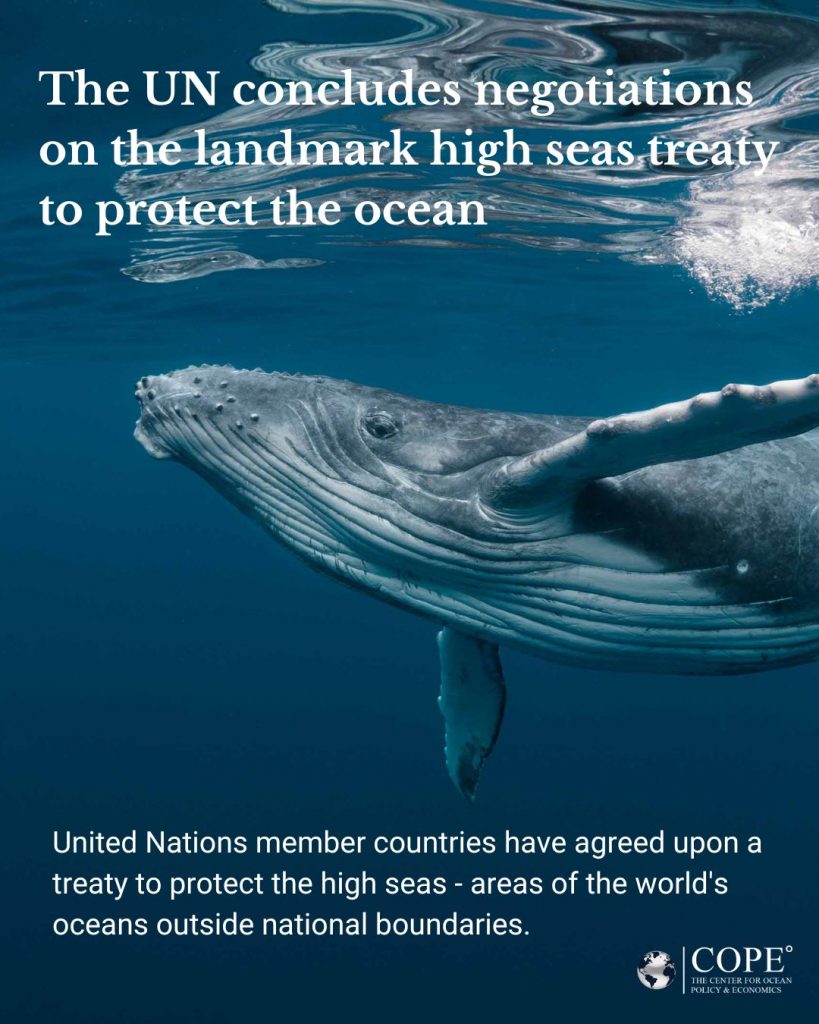
The Center for Ocean Policy and Economics – COPE° is extremely excited about the conclusions of the global negotiations on the landmark UN ‘High Seas Treaty’ to protect the oceans. This treaty is crucial for addressing the triple planetary crisis of climate change, biodiversity loss and pollution.

The initiative will tackle environmental degradation by preserving a massive portion of our ocean. It is also vital for achieving the ocean-related goals and targets of the 2030 Agenda for Sustainable Development, and the Kunming-Montreal Global Biodiversity Framework.

As the principle framework has been laid down, nations will now work towards adoption of the treaty. 

UN Secretary-General Mr. António Guterres recognized the critical support of non-governmental organizations, civil society, academic institutions and the scientific community in a statement during his announcement of this historic agreement. He looks forward to continuing working with all parties to secure a healthier, more resilient, and more productive ocean, benefiting current and future generations.

COPE° believes this treaty is a great step forward and recognizes that there is still much work to be done to tackle the ocean’s wicked problems.

The world must come together to solve adverse ocean, atmospheric and environmental problems. COPE° was developed to serve as both a driver for change, as well as a vessel for others to share ideas, collaborate, and pool resources to tackle the immense problems present in our world today. Collaboration and dialogue across the entire spectrum of stakeholders in the maritime domain will allow for academic, corporate, non-governmental, and governmental partners to create impactful solutions.

Read more about the treaty HERE.

As the principle framework has been laid down, nations will now work towards adoption of the treaty. 

UN Secretary-General Mr. António Guterres recognized the critical support of non-governmental organizations, civil society, academic institutions and the scientific community in a statement during his announcement of this historic agreement. He looks forward to continuing working with all parties to secure a healthier, more resilient, and more productive ocean, benefiting current and future generations.

COPE° believes this treaty is a great step forward and recognizes that there is still much work to be done to tackle the ocean’s wicked problems.


The world must come together to solve adverse ocean, atmospheric and environmental problems. COPE° was developed to serve as both a driver for change, as well as a vessel for others to share ideas, collaborate, and pool resources to tackle the immense problems present in our world today. Collaboration and dialogue across the entire spectrum of stakeholders in the maritime domain will allow for academic, corporate, non-governmental, and governmental partners to create impactful solutions.

Read more about the treaty HERE.

17 January Meeting – COPE° Working group on Psychological Safety and Sexual Assault and Harassment in the Maritime Sector

Meeting Minutes: COPE° Working group on Psychological Safety and Sexual Assault and Harassment in the Maritime Sector

TUES, 17 JANUARY 2023 | 7:00 AM EST

1) Welcome and Introduction

Proposed new members.

There were no objections to the submission of these new members, therefore everyone is very much welcomed to participate and to become a member of the COPE° working group.

2) Activities and Scope of Work

a) Review and amend existing IMO Model Course 1.21 PSSR & Evaluate and provide training options

The IMO Sub- committee on Human Element Training and Watchkeeping – HTW9 – is meeting from 6 February to 10 February in London. Members of this group are invited to observe this meeting when they are interested, please contact Eva when this is the case.

Actions we need to take for this meeting:

  1. Preparing the visit to IMO in London and plenary introduction at HTW9, focusing on both the document we submitted, as well as on the term psychological safety.
  2. Schedule a quick meeting before 6 February to discuss the HTW meeting preparations.

The work we did last year, amending Model Course 1.21 on PSSR can be used as a basis for further work and developing training material. Which will be freely available for all.

We will start building curriculum on NEMO° Psychological Safety course. Goal is to focus on psychological safety, bullying and SASH build course around these subjects, (use additional time suggested).

  1. Formulate outcomes and objectives. Material and documents to formulate.
  2. Set up and share the NEMO° course template.
  3. Build the course and work collectively.
  4. Test course with students, provide it on NEMO°.

We will move this work into a new sub-group. Everyone who is willing to contribute or participate in this work is kindly invited.

b) Awareness and response

Output and information from the group, that is relevant for mariners and other maritime professionals, will be shared online by means of different channels. The working group will be open to hear the voice of the industry and take information into consideration.

  • The next The COPE° Podcast episode is planned for Thursday 19 January at 18.00 GMT. Eva, Patti and Koni will talk about “Speaking up”.
    • Please find all previous episodes, including the new one, HERE
    • Everyone is welcomed and invited to participate in these podcasts.
    • Nancy Karigithu will be on the next podcast episode with us.
    • MIWB students from Welmoed her class, reviewed the podcast episodes and had some great feedback
    • Hannah and Eva will work on developing and improving the podcast. We will transfer it to the Maritime Matters Podcast, provide more structure and make it look more professional.
    • Students from Gillian her class will also review the podcast episodes
  • Jillian is writing a big article about psychological safety for DCN magazine. Many other people from this working group helped her creating language. We are very excited to see more attention about this topic in (maritime) media.
  • Everyone is invited to share the Position Paper of our group. Please find the updated version on thecope.org
  • A social media plan for COPE° group need to be coordinated and put into practice, we have a basic structure.

c) Data Collection, Output and Harmonization

Next meeting of this sub-group will be planned in March 2023, we will follow up with tasks and actions discussed in the previous meeting of this sub-group:

Tasks and actions:

  1. Create a safe data/governance structure.
  2. Everyone is invited to update the literature and resources list.
  3. Update the COPE° website with a resource database (Hannah and
  4. How do we create a data consortium, start dialogue, sharing ideas and views.
  5. Follow up about possible interviews amongst IMU members to ask whether there is a need for education with regards to psychological safety and DEIA relating matters. (Momoko and Eva)

COPE data resources
Use google docs to collect and maintain a list of bibliography, research, articles, guidances and other open access documents. In time we can categorize and divide types of resources. We can also look into the ‘Maritime Lab’ initiative.

Since the data is sensitive, with collecting and sharing data, we have to be aware of: ethical clearance, data protection, data governance, etc. We want data to inform our decisions.

Research gap
Do MET institutions actually teach the subjects around psychological safety, diversity, equity, inclusion and/or have experience with bullying, SASH in the maritime sector. Check interest in this kind of education. How large is the need, and support base? Momoko offered to use her IMU network, do interviews with member universities. We could also include GlobalMET (Jillian). Sailors Society.

Welmoed, Gillian and Koni shared there experience: interest is definitely there, also from students.

Gordon shared links from training that is currently done by MLA Plymouth. Gordon and Chris were involved in developing this training. https://www.mla.ac.uk/, https://www.mla.ac.uk/case-studies/gordon-foot/

d) Reporting mechanisms and accountability

Next meeting of this sub-group will be planned in March 2023, we will follow up with tasks and actions discussed in the previous meeting of this sub-group:

Tasks and actions:

  1. Focus on responsibility and accountability of flagstates, maritime authorities, companies, etc.
  2. Proposal to IMO for statistics. (Eva will follow up with the Saudi Arabia team, and Saleha)
  3. What are the different reporting mechanisms that are used right now?
  4. Ask Global Maritime Forum about Pinkwashing

Goals and topics:

  • How can we lift the cover that surrounds bullying and SASH in the maritime sector? (remove the sugarcoat, stop the gaslighting)
  • Have a structure that is transparent, have a reporting mechanism that is unified and clear. So people can be safe (as a basis).
  • Investigate if it is possible to gain IMO statistics on incidents for sexual harassment/bullying etc if recorded. Work on a proposal/request for IMO statistics. Potential to reach out to countries through IMO. Requires additional planning.
  • Need for guidance to shipping companies on policies. Use information that is collected by Universities (MET).
  • What are the policies of portstates, flagstates and companies. How long does it take for them to investigate?
  • ISWAN collects data from seafarers through their helplines (it is not the primary purpose and sometimes misses information). ISWAN is focusing and developing a program to collect data as a totality. Goal is to create actionable recommendations for the industry. Find ways to show and share what seafarers are facing.
  • Happiness Index: Ask if they can add questions about bullying and SASH?
  • Inform and push the need for ‘psychological safety’ at the commercial drivers, companies and other stakeholders.
  • Discussions about speak up culture, allyship, safeguarding. Including ISO standards, etc.

3) Any other business

We would like to draw attention to the following:

The Center for Ocean Policy and Economics, is supporting the candidacy of Ambassador Nancy Karigithu to become the next Secretary General of IMO.

We wish to congratulate Nancy, and invite all other members of this working group to support and raise awareness for her candidacy. She would be the first female Secretary General of the IMO and the first from Africa, a remarkable and necessary milestone.

  • Please find the press release attached to these meeting minutes.

We were invited to talk about our COPE working group and our achievements by:

  • Several podcast hosts and platforms
  • Conference of Tall Ships America

4) Next Meeting

Proposed future meeting days:
The next meetings of the COPE° Working group (main group):
Tuesday 14 Feburary 2023 at 11.00 GMT

Meeting on HTW9 preparations:
Monday 30 January at 20.00 GMT
(07.00 AEDT, 15.00 EST, 21.00 CET. People who have indicated they will be (virtually) joining HTW will be added to the meeting invite.)

The next meeting of the Sub-Group on Data Collection, Output and Harmonization
To be determined

The next meeting of the Sub-Group on Reporting mechanisms and accountability
To be determined

ANNEX A
List of Members and Participants

The members and participates of the COPE° Working group on Psychological Safety and Sexual Assault and Harassment in the Maritime Sector are listed below.

*The information in the list is privacy sensitive, and thus will not be published here.*

ANNEX B
Terms of Reference

The COPE° Working group on Psychological Safety and Sexual Assault and Harassment in the Maritime Sector is hosted by Center for Ocean Policy and Economics, a subset of The Northeast Maritime Institute – College of Maritime Science. COPE° facilitates committed maritime government, non-government, corporate, education, science and technology experts and partners to collaborate and create drivers for change. Members of the working group will be sharing information, ideas, learnings and pooling resources in order to work on:

  1. developing and delivering relevant actions and impactful solutions
  2. drivers for change, in order to tackle the wicked problems present in our world today
  3. solutions to build on an international UN framework to connect the industry to objectives.

The work the COPE° working group will be driven by ethical and humanitarian based values, taking into account:

  1. building on a psychologically safe workplace culture in the maritime sector
  2. the successful integration of vulnerable and marginalized groups, in support of diversity, equality, equity, inclusion and acceptance
  3. the issues relating to sexual assault, harassment and bullying in the maritime sector
  4. transparency and integrity
  5. supporting and honoring mariners globally

6 December Meeting – COPE° Working group on Psychological Safety and Sexual Assault and Harassment in the Maritime Sector

Meeting Minutes: COPE° Working group on Psychological Safety and Sexual Assault and Harassment in the Maritime Sector

TUES, DECEMBER 6, 2022 | 7:00 AM EST

1) Welcome and Introduction

Proposed new members.

There were no objections to the submission of these new members, therefore everyone is very much welcomed to participate and to become a member of the COPE° working group.

Welcome new members.

2) Activities and Scope of Work

a) Sub-Group on Review and amend existing IMO Model Course 1.21 PSSR

Status on the work regarding the PSSR Model Course and STCW review:

  1. Our document was submitted for HTW9 with proposed amendments on requirements for KUPs for STCW Convention and Code, Chapter A-VI Table1-4.
  2. We gathered a total of 14 Co-Sponsors of the document: Dominica, Bahamas, Brazil, Kenya, Abuja MoU, Saudi Arabia, South Africa, Türkiye, Viet Nam, IFSMA, IMHA, InterManager, OCIMF and WISTA.
  3. Will prepare the plenary introduction accordingly.
  4. Any information about a side event at HTW9 about this topic?

Final draft document is shared together with these meeting notes in email.

b) Evaluate and provide training options

Our document with proposed amendments on Model Course 1.21 on PSSR can be used as a basis for further work, develop training material. Which will be freely available for all. We can start building curriculum on NEMO° PSSR Course.

Goal to focus on psychological safety, bullying and SASH build course around these subjects, (use additional time suggested). Important to get it out and get it going.

  1. Formulate outcomes and objectives. Material and documents to formulate. Re-write.
  2. Set up and share the NEMO° course template.
  3. Build the course and work collectively.
  4. Test course with students, provide it on NEMO°.

We will move this work into a new sub-group.
Everyone who is willing to contribute or participate in this work is kindly invited.

Discussions: We need to look into continuous feedback mechanisms on IMO Model Courses, curriculum, etc. Standing curriculum needs a review body to keep monitoring.
Keep an eye on global/national issues relating to education and what people need in education, noting the (cultural) differences. Need for empowerment of MET teachers and developers.

c) Harmonizing best practices and guidance documents, industry resources and studies

The sub-group on ‘Data Collection, Output and Harmonization’ had a meeting on Monday 31 October at 11.00 UTC.

  • We need to set up new Terms of reference for this sub-group.
  • Goal is to create a data consortium, hosted by COPE°, make the data actionable. Create solutions. Data repositories. Create more transparency. Focus in dialogue, sharing ideas and views, making data/resources available for people to take things forward.
  • Some of the fieldwork that is needed to support and help people, might be handled by mental health professionals.
  • COPE° reporting button on the website, share resources and guidance’s on the website.
  • How would we like to see data shared: thoughts?

d) Awareness and response

Building awareness and implementing change in the maritime industry in all areas surrounding psychological and physical safety in the maritime sector.
The sub-group on ‘Reporting mechanisms and accountability’ had a meeting on Tuesday 1 November at 11.00 UTC.

We need to address the following subjects: Regulation, Reporting, Investigation, Accountability:
• Implementation of Regulation
• Create a regulatory scheme that requires confidentiality
• Implementation of a Reporting Process
o Ensure that maritime administrations can receive information
• Implementation of Investigatory Process
o Ensure there is an appropriate body of individuals to lead the investigation
• Creation of Platform for Accountability
o Ensure there is a judicial platform to maintain accountability

Importance of data: There is much data that already exists (i.e. academic institutions, research organizations, etc.), and there should be an effort to utilize that data. The more data that can be accessed, the more accurately and efficiently regulations can be created and implemented. it is important to recognize that we cannot wait around for more data. We must proceed with the data we have and continue to collect more as time goes on.
• Include information about the joint IMO/ILO working group, port-based welfare committees, IHMA forum, ICMA or other organizations and might have information.
• Where should we collect data from? How do we involve all stakeholders? How to we establish guidelines for the creation of investigatory bodies that are appropriate, efficient and fair?
o Proposal from Saudi Arabia to work on a proposal/request for IMO statistics – Investigate if it is possible to gain IMO statistics on incidents for sexual harassment/bullying etc if recorded. Potential to reach out to countries through IMO. Requires additional planning.
o ITF may have statistics/data as well. Global Maritime Forum collect data from shipmanagers to share data.

e) Reporting mechanisms and accountability

Building awareness and implementing change in the maritime industry in all areas surrounding psychological and physical safety in the maritime sector.

The sub-group on ‘Reporting mechanisms and accountability’ had a meeting on Tuesday 1 November at 11.00 UTC.

We need to address the following subjects: Regulation, Reporting, Investigation, Accountability:

  • Implementation of Regulation
  • Create a regulatory scheme that requires confidentiality
  • Implementation of a Reporting Process
    • Ensure that maritime administrations can receive information
  • Implementation of Investigatory Process
    • Ensure there is an appropriate body of individuals to lead the investigation
  • Creation of Platform for Accountability
    • Ensure there is a judicial platform to maintain accountability

Importance of data: There is much data that already exists (i.e. academic institutions, research organizations, etc.), and there should be an effort to utilize that data. The more data that can be accessed, the more accurately and efficiently regulations can be created and implemented. it is important to recognize that we cannot wait around for more data. We must proceed with the data we have and continue to collect more as time goes on.

  • Include information about the joint IMO/ILO working group, port-based welfare committees, IHMA forum, ICMA or other organizations and might have information.
  • Where should we collect data from? How do we involve all stakeholders? How to we establish guidelines for the creation of investigatory bodies that are appropriate, efficient and fair?
    • Proposal from Saudi Arabia to work on a proposal/request for IMO statistics – Investigate if it is possible to gain IMO statistics on incidents for sexual harassment/bullying etc if recorded. Potential to reach out to countries through IMO. Requires additional planning.
    • ITF may have statistics/data as well. Global Maritime Forum collect data from shipmanagers to share data.

3) Any other business

No new input

4) Next Meeting

Proposed future meeting days:

The next meetings of the COPE° Working group (main group):

  • Tuesday 17 January 2022 at 12.00 UTC

The next meeting of the Sub-Group on PSSR Model Course:

  • Tuesday 13 December 2022 20.00 UTC

Combined meeting on two different times:
The next meeting of the Sub-Group on Data Collection, Output and Harmonization
The next meeting of the Sub-Group on Reporting mechanisms and accountability

  • Tuesday 20 December 2022 at 11.00 UTC
  • Tuesday 20 December 2022 at 20.00 UTC

ANNEX A
List of Members and Participants

The members and participates of the COPE° Working group on Psychological Safety and Sexual Assault and Harassment in the Maritime Sector are listed below.

*The information in the list is privacy sensitive, and thus will not be published here.*

ANNEX B
Terms of Reference

The COPE° Working group on Psychological Safety and Sexual Assault and Harassment in the Maritime Sector is hosted by Center for Ocean Policy and Economics, a subset of The Northeast Maritime Institute – College of Maritime Science. COPE° facilitates committed maritime government, non-government, corporate, education, science and technology experts and partners to collaborate and create drivers for change. Members of the working group will be sharing information, ideas, learnings and pooling resources in order to work on:

  1. developing and delivering relevant actions and impactful solutions
  2. drivers for change, in order to tackle the wicked problems present in our world today
  3. solutions to build on an international UN framework to connect the industry to objectives.

The work the COPE° working group will be driven by ethical and humanitarian based values, taking into account:

  1. building on a psychologically safe workplace culture in the maritime sector
  2. the successful integration of vulnerable and marginalized groups, in support of diversity, equality, equity, inclusion and acceptance
  3. the issues relating to sexual assault, harassment and bullying in the maritime sector
  4. transparency and integrity
  5. supporting and honoring mariners globally

25 October Meeting – COPE° Working group on Psychological Safety and Sexual Assault and Harassment in the Maritime Sector

Meeting Minutes: COPE° Working group on Psychological Safety and Sexual Assault and Harassment in the Maritime Sector

TUES, OCTOBER 25, 2022 | 7:00 AM EST

1) Welcome and Introduction

Proposed new members.

Welcomed new members.

All proposed new members were very much welcomed to participate and to become a member of the COPE° working group.

2) Activities and Scope of Work

a) Sub-Group on Review and amend existing IMO Model Course 1.21 PSSR

Status on the work regarding the PSSR Model Course and STCW review is as follows:

  1. Document for submission for HTW9 with amendments on requirements for KUPs for STCW Convention and Code, Chapter A-VI Table1-4 is ready.
  2. Document with proposed amendments on Model Course 1.21 on PSSR is ready. And can be used as a basis for further work, both within IMO and outside IMO to develop training material.
  3. We will gather Co-Sponsors of the document. Everyone is invited to share and reach out to interested IMO Member States and NGO’s.

Action requested:

  • Start building curriculum on NEMO° PSSR Course, which will be freely available for all. Begin with outcomes and objective.

b) Evaluate and provide training options

The group will work on the IMO Model Course on PSSR, and remain open to suggestions, collaborations and/or further work. Developing a course on NEMO°, which will be offered free of costs for mariners globally, is one of the plans.

All group members are invited to contribute and develop curriculum together. We will set up a course development template, so we can divide the work and work collaboratively.

c) Harmonizing best practices and guidance documents, industry resources and studies

  • The sub-group on ‘Data Collection, Output and Harmonization’ will have the next meeting on Monday 31 October. The group will be updated for further details.
  • The group agreed on the Terms of reference for this sub-group as follows:

Terms of Reference
Sub-Group on Data Collection, Output and Harmonization

The sub-group on Data Collection, Output and Harmonization will work on:

  • Providing reliable and relatable resources of data to seafarers, maritime employers and other relevant parties.
  • Data analytics to support the work of the working group, by focusing on targeted areas of interest from an evidence-based research perspective.
  • Identification of best practices and indicate areas for further research and advice.
  • Harmonize, specify and package data outputs to make it user-friendly, practicable and commercially attractive.

While noting:

  • The value and acknowledgment of the role that data plays in our work
  • The importance of reliable resources, credibility and professionalism
  • Different kinds of perspectives, goals and approaches
  • The barriers that may arise with collecting data
  • Validation of the data by doing quality checks, methodology checks, source information, etc.

Future actions of this sub-group:

  • Debbie was asked and kindly agreed to chair and coordinate the sub-group, together with Eva.

  • We will create a resources page on the COPE° website, so information will be available more conveniently and more transparent.

  • We will create a guide for resources for the Environmental and Social Governance (ESG) for companies applicable for shipping.

Discussions about the ToR of this group regarding the term ‘commercially attractive’. This was meant to provide companies and organizations with outputs that are attractive to their businesses.

d) Awareness and response

Output relevant for mariners and other maritime professionals will be shared online by means of different channels. The working group will be open to hear the voice of the industry and take information into consideration.

  • Patti and Eva will start up a podcast/livessesion series. Episodes every two weeks.
  • Next YouTube live session is Thursday 27 October at 19.00 UTC.
  • Please find all episodes, including the new one, here: https://youtube.com/playlist?list=PLmMPJeIomaucuVP58FtbZ7RdTZI2pwctd
  • Everyone is invited to participate in these podcasts. And is invited to share the invites and spread awareness.
  • Everyone is invited to share the Position Paper of our group. Please find the updated version attached to the meeting minutes.

Concern: finding someone to coordinate social media engagement.

e) Reporting mechanisms and accountability

  • Investigate more about SASH reporting mechanism, accountability, processes, responsibilities and guidance’s.
  • Invite people to think about how we can link language about reporting mechanisms and accountability of the IMO model course 1.21 into the ISM Code and ISPS Code.
  • Include information about the joint IMO/ILO working group, port-based welfare committees, IHMA forum, ICMA or other organizations and might have information.

Actions:
Proposal to have a separate meeting about reporting mechanisms. Develop ideas, brainstorming sessions. Our group is the ideal platform to get various people/stakeholders together to discuss. A meeting for this group is planned on: Tuesday 1 November at 11.00 UTC

  • Agenda for this meeting:
    • Brainstorm and share ideas
    • How to properly equip relevant organizations with the tools needed.
    • Welcomes help to provide specialized training to people who are assisting people in need of mental health support.
    • Safer Waves has support guidance and training available.
    • How to get various people/stakeholders together to discuss.
    • How do we deliver this information and talk about it in forums, training, through NEMO°?

3) Any other business

  • Members of the working group will be participating and talking about the work of our group, in these upcoming conferences: Maritime SheEO to be held in Mumbai on November 16th, 2022. Hybrid meeting.
  • IMO Statistics Proposal – Investigate if it is possible to gain IMO statistics on incidents for sexual harassment/bullying etc if recorded. Potential to reach out to countries through IMO but requires additional planning.
  • ITF may have statistics/data as well. Global Maritime Forum collect data from shipmanagers to share data.

4) Next Meeting

Proposed future meeting days:

The next meetings of the COPE° Working group (main group):

  • Tuesday 15 November 2022 at 11.00 UTC

The next meeting of the Sub-Group on Data Collection, Output and Harmonization:

  • Monday 31 October at 11.00 UTC

The next meeting of the Sub-Group on Reporting mechanisms and accountability:

  • Tuesday 1 November at 11.00 UTC

ANNEX A
List of Members and Participants

The members and participates of the COPE° Working group on Psychological Safety and Sexual Assault and Harassment in the Maritime Sector are listed below.

*The information in the list is privacy sensitive, and thus will not be published here.*

ANNEX B
Terms of Reference

The COPE° Working group on Psychological Safety and Sexual Assault and Harassment in the Maritime Sector is hosted by Center for Ocean Policy and Economics, a subset of The Northeast Maritime Institute – College of Maritime Science. COPE° facilitates committed maritime government, non-government, corporate, education, science and technology experts and partners to collaborate and create drivers for change. Members of the working group will be sharing information, ideas, learnings and pooling resources in order to work on:

  1. developing and delivering relevant actions and impactful solutions
  2. drivers for change, in order to tackle the wicked problems present in our world today
  3. solutions to build on an international UN framework to connect the industry to objectives.

The work the COPE° working group will be driven by ethical and humanitarian based values, taking into account:

  1. building on a psychologically safe workplace culture in the maritime sector
  2. the successful integration of vulnerable and marginalized groups, in support of diversity, equality, equity, inclusion and acceptance
  3. the issues relating to sexual assault, harassment and bullying in the maritime sector
  4. transparency and integrity
  5. supporting and honoring mariners globally
medical reasons for premature ejaculation what science reveals where to buy male enhancement pills trusted online stores top rated brands elevate your upper lip bold enhancement for men s confidence natural erectile support over the counter pills for stronger lasting performance revitalizing your libido natural strategies for navigating menopause craft your own expert verified cannabis gummie recipe for natural wellness ultimate guide to finding the best cbd thc gummies for anxiety relief unlock the power of vitacore cbd gummies your path to a healthier you why do some cbd gummies cause stomach issues expert tips to prevent digestive discomfort unlocking the potential of cbd gummies for kids a pathway to a healthier tomorrow bulk up your wellness a comprehensive review of batch cbd gummies cbd gummies for diabetics where to buy for natural diabetes management experience the power of makers cbd gummies 300mg the best cbd gummies for optimal wellness are fish oil pills effective for weight loss science backed insights go 90 keto gummies review expert insights user experiences and weight loss effectiveness nutrisystem ultimate shakes savor winter festivities with healthy indulgence active keto gummies vs olly slim protein gummies which is better for effective weight loss true form keto gummies review is this the right choice for your weight loss journey ariana grande s weight loss journey real talk on shedding pounds and getting in shape maximize your results synergy of supplements and exercise for fat loss and muscle building