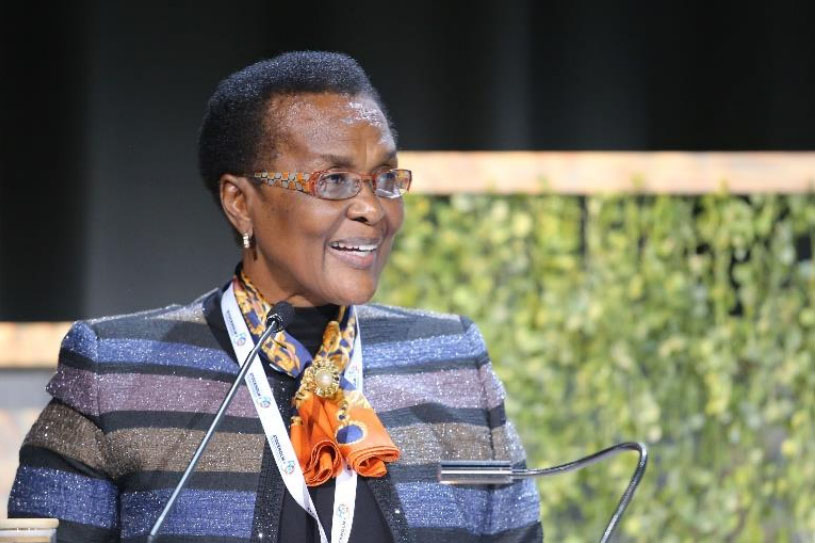
COPE endorses Nancy Karigithu for Secretary General of IMO
COPE endorses Nancy Karigithu for Secretary General of IMO Read More »
Proposed new members.
There were no objections to the submission of these new members, therefore everyone is very much welcomed to participate and to become a member of the COPE° working group.
Welcome new members.
Status on the work regarding the PSSR Model Course and STCW review:
Final draft document is shared together with these meeting notes in email.
Our document with proposed amendments on Model Course 1.21 on PSSR can be used as a basis for further work, develop training material. Which will be freely available for all. We can start building curriculum on NEMO° PSSR Course.
Goal to focus on psychological safety, bullying and SASH build course around these subjects, (use additional time suggested). Important to get it out and get it going.
We will move this work into a new sub-group.
Everyone who is willing to contribute or participate in this work is kindly invited.
Discussions: We need to look into continuous feedback mechanisms on IMO Model Courses, curriculum, etc. Standing curriculum needs a review body to keep monitoring.
Keep an eye on global/national issues relating to education and what people need in education, noting the (cultural) differences. Need for empowerment of MET teachers and developers.
The sub-group on ‘Data Collection, Output and Harmonization’ had a meeting on Monday 31 October at 11.00 UTC.
Building awareness and implementing change in the maritime industry in all areas surrounding psychological and physical safety in the maritime sector.
The sub-group on ‘Reporting mechanisms and accountability’ had a meeting on Tuesday 1 November at 11.00 UTC.
We need to address the following subjects: Regulation, Reporting, Investigation, Accountability:
• Implementation of Regulation
• Create a regulatory scheme that requires confidentiality
• Implementation of a Reporting Process
o Ensure that maritime administrations can receive information
• Implementation of Investigatory Process
o Ensure there is an appropriate body of individuals to lead the investigation
• Creation of Platform for Accountability
o Ensure there is a judicial platform to maintain accountability
Importance of data: There is much data that already exists (i.e. academic institutions, research organizations, etc.), and there should be an effort to utilize that data. The more data that can be accessed, the more accurately and efficiently regulations can be created and implemented. it is important to recognize that we cannot wait around for more data. We must proceed with the data we have and continue to collect more as time goes on.
• Include information about the joint IMO/ILO working group, port-based welfare committees, IHMA forum, ICMA or other organizations and might have information.
• Where should we collect data from? How do we involve all stakeholders? How to we establish guidelines for the creation of investigatory bodies that are appropriate, efficient and fair?
o Proposal from Saudi Arabia to work on a proposal/request for IMO statistics – Investigate if it is possible to gain IMO statistics on incidents for sexual harassment/bullying etc if recorded. Potential to reach out to countries through IMO. Requires additional planning.
o ITF may have statistics/data as well. Global Maritime Forum collect data from shipmanagers to share data.
Building awareness and implementing change in the maritime industry in all areas surrounding psychological and physical safety in the maritime sector.
The sub-group on ‘Reporting mechanisms and accountability’ had a meeting on Tuesday 1 November at 11.00 UTC.
We need to address the following subjects: Regulation, Reporting, Investigation, Accountability:
Importance of data: There is much data that already exists (i.e. academic institutions, research organizations, etc.), and there should be an effort to utilize that data. The more data that can be accessed, the more accurately and efficiently regulations can be created and implemented. it is important to recognize that we cannot wait around for more data. We must proceed with the data we have and continue to collect more as time goes on.
No new input
Proposed future meeting days:
The next meetings of the COPE° Working group (main group):
The next meeting of the Sub-Group on PSSR Model Course:
Combined meeting on two different times:
The next meeting of the Sub-Group on Data Collection, Output and Harmonization
The next meeting of the Sub-Group on Reporting mechanisms and accountability
ANNEX A
List of Members and Participants
The members and participates of the COPE° Working group on Psychological Safety and Sexual Assault and Harassment in the Maritime Sector are listed below.
*The information in the list is privacy sensitive, and thus will not be published here.*
ANNEX B
Terms of Reference
The COPE° Working group on Psychological Safety and Sexual Assault and Harassment in the Maritime Sector is hosted by Center for Ocean Policy and Economics, a subset of The Northeast Maritime Institute – College of Maritime Science. COPE° facilitates committed maritime government, non-government, corporate, education, science and technology experts and partners to collaborate and create drivers for change. Members of the working group will be sharing information, ideas, learnings and pooling resources in order to work on:
The work the COPE° working group will be driven by ethical and humanitarian based values, taking into account:
Proposed new members.
Welcomed new members.
All proposed new members were very much welcomed to participate and to become a member of the COPE° working group.
Status on the work regarding the PSSR Model Course and STCW review is as follows:
Action requested:
The group will work on the IMO Model Course on PSSR, and remain open to suggestions, collaborations and/or further work. Developing a course on NEMO°, which will be offered free of costs for mariners globally, is one of the plans.
All group members are invited to contribute and develop curriculum together. We will set up a course development template, so we can divide the work and work collaboratively.
Terms of Reference
Sub-Group on Data Collection, Output and Harmonization
The sub-group on Data Collection, Output and Harmonization will work on:
While noting:
Future actions of this sub-group:
Debbie was asked and kindly agreed to chair and coordinate the sub-group, together with Eva.
We will create a resources page on the COPE° website, so information will be available more conveniently and more transparent.
We will create a guide for resources for the Environmental and Social Governance (ESG) for companies applicable for shipping.
Discussions about the ToR of this group regarding the term ‘commercially attractive’. This was meant to provide companies and organizations with outputs that are attractive to their businesses.
Output relevant for mariners and other maritime professionals will be shared online by means of different channels. The working group will be open to hear the voice of the industry and take information into consideration.
Concern: finding someone to coordinate social media engagement.
Actions:
Proposal to have a separate meeting about reporting mechanisms. Develop ideas, brainstorming sessions. Our group is the ideal platform to get various people/stakeholders together to discuss. A meeting for this group is planned on: Tuesday 1 November at 11.00 UTC
Proposed future meeting days:
The next meetings of the COPE° Working group (main group):
The next meeting of the Sub-Group on Data Collection, Output and Harmonization:
The next meeting of the Sub-Group on Reporting mechanisms and accountability:
ANNEX A
List of Members and Participants
The members and participates of the COPE° Working group on Psychological Safety and Sexual Assault and Harassment in the Maritime Sector are listed below.
*The information in the list is privacy sensitive, and thus will not be published here.*
ANNEX B
Terms of Reference
The COPE° Working group on Psychological Safety and Sexual Assault and Harassment in the Maritime Sector is hosted by Center for Ocean Policy and Economics, a subset of The Northeast Maritime Institute – College of Maritime Science. COPE° facilitates committed maritime government, non-government, corporate, education, science and technology experts and partners to collaborate and create drivers for change. Members of the working group will be sharing information, ideas, learnings and pooling resources in order to work on:
The work the COPE° working group will be driven by ethical and humanitarian based values, taking into account:
Proposed new members.
All proposed new members were very much welcomed to participate and to become a member of the COPE° working group.
The way forward of this sub-group on the PSSR Model Course is as follows:
Finalize proposed amendments on requirements for KUPs for STCW Convention Chapter A-VI Table1-4.
Finalize proposed amendments on Model Course 1.21 on PSSR, and use this work as a basis for the further work, both within IMO and outside IMO to develop training material.
Finalize the document for submission for HTW9, including Annex 1 containing the Table1-4 of STCW Chapter A-VI on KUP’s. This document will have language regarding who the ‘course developer’ for the future drafting committee will be. And the process described needs to be based on the revised approach on modelcourse framework revision as mentioned in Circ. MSC-MEPC.2/Circ.15/Rev.1 (of 10 January 2019 / as revised by HTW 7/7)
Future focus can be also on STCW Chapter I – Regulation 14 for Companies (Guidance regarding responsibilities of companies and recommended responsibilities of masters and crew) This regulation will provide a link to future work on the ISM Code. Familiarization Training Requirements in the ISM code: Part A 6.3 and SOLAS CH III/19.4.1
The suggested edits as provided in the document containing the (Knowledge Understanding and Proficiency) KUP’s in STCW Convention Chapter A-VI Table1-4, are based on the suggested edits on the Model Course on PSSR. These edits emerged from the discussions we had while we worked on reviewing the Model Course 1.21 on PSSR. All tracked changes, background information and and comments can be found in the document on the actual model course itself.
The group will work on the IMO Model Course on PSSR, and remain open to suggestions, collaborations and/or further work. Developing a course on NEMO°, which will be offered free of costs for mariners globally, is one of the plans.
All group members are invited to contribute and work from a shared course-template on Teams, Jillian provided an ADDI model for course design, and the microlearning template she used for NEMO° VTS Essentials course for this purpose.
Harmen van der Ende invited us to develop a workshop together with the Minor on Human Sustainability of Maritime Institute Willem Barentsz together with his colleague Welmoed van der Velde. They also offered to test the updated PSSR course with their students, when we start working on that. Everyone who is willing to contribute or participate in this work is kindly invited, please contact Eva in case you are interested.
Terms of Reference
Sub-Group on Data Collection, Output and Harmonization
The sub-group on Data Collection, Output and Harmonization will work on:
While noting:
Future actions of this sub-group:
Debbie was asked and kindly agreed to chair and coordinate the sub-group, together with Eva.
We will create a resources page on the COPE° website, so information will be available more conveniently and more transparent.
We will create a guide for resources for the Environmental and Social Governance (ESG) for companies applicable for shipping.
Discussions about the ToR of this group regarding the term ‘commercially attractive’. This was meant to provide companies and organizations with outputs that are attractive to their businesses.
Output relevant for mariners and other maritime professionals will be shared online by means of different channels. The working group will be open to hear the voice of the industry and take information into consideration.
Actions:
The joint IMO-ILO Tripartite Working Group will have their first meeting in Geneva (13-16 December) – to identify and address seafarers’ issues and human element. The meeting on 13-16 December is specifically about abandonment of ships and crews. Proposal for this group to consider bullying or harassment.
Actions:
Saleha: Proposal to have a separate meeting about reporting mechanisms. Develop ideas, brainstorming sessions. Our group is the ideal platform to get various people/stakeholders together to discuss.
Members of the working group will be participating and talking about the work of our group, in these upcoming conferences:
Proposed future meeting days:
ANNEX A
List of Members and Participants
The members and participates of the COPE° Working group on Psychological Safety and Sexual Assault and Harassment in the Maritime Sector are listed below.
*The information in the list is privacy sensitive, and thus will not be published here.*
ANNEX B
Terms of Reference
The COPE° Working group on Psychological Safety and Sexual Assault and Harassment in the Maritime Sector is hosted by Center for Ocean Policy and Economics, a subset of The Northeast Maritime Institute – College of Maritime Science. COPE° facilitates committed maritime government, non-government, corporate, education, science and technology experts and partners to collaborate and create drivers for change. Members of the working group will be sharing information, ideas, learnings and pooling resources in order to work on:
The work the COPE° working group will be driven by ethical and humanitarian based values, taking into account:
20 September 2022
CHALLENGES AND RISKS CAUSED BY THE COVID-19 PANDEMIC WITHIN THE MARITIME INDUSTRY
The COVID-19 pandemic posed severe challenges for flag states, port authorities, shipping- and crewing companies. Crew changes were severely hindered since international shipping and Governments were unable to facilitate crew changes and unable to respond effectively to these challenges. Restrictions and delays of crew changes and repatriation, including the measures implemented by countries, brought serious operational consequences, and caused a humanitarian crisis at sea.
Consequently, mariners and seafarers faced the risk of extreme fatigue, physical and mental health crises, increasing the risk of maritime casualties that include collisions, allisions and groundings. Maritime labour rights and basic human rights could not be secured and protected. Without humans, ships cannot move goods or provide services. Thus, the crew change crisis highlighted a severe risk for our global supply chain.
In February 2022, the International Labour Organization (ILO), the International Maritime Organization (IMO), UNCTAD and the World Health Organization (WHO) urged governments, the shipping industry and other stakeholders to scale up efforts to safeguard seafarer health and safety to avoid supply chain disruptions during the ongoing pandemic.
Many seafarers today, are still
The severe risk for human wellbeing and risks for the global supply chains require further action from all parties concerned worldwide.
Current mandates of UN organizations do not go beyond urging member states to follow UN Resolutions. A holistic approach is needed to ensure that all parties within the maritime industry take action, further pushing UN objective, furthering the mandate of the International Maritime Organization.
“Honor the Mariner”
The people working at the Center for Ocean Policy and Economics (COPE°), The Commonwealth of Dominica Maritime Administration and Northeast Maritime Institute stand firmly in support of the ‘human element’ – what they feel is the most important element of global maritime trade. The purpose and mission of these companies is to provide services to seafarers through a humanitarian approach, providing the opportunity to improve careers and livelihoods.
Reducing the Negative Impact of Seafarers’ Physical Health, Welfare and Well-Being Using COPE° and NEMO°
The Center for Ocean Policy and Economics (COPE°) links academic, corporate, non-governmental, and governmental partners to create impactful solutions. COPE° enables people to work on driving necessary change in the maritime sector, with ethical and humanitarian values guiding those efforts. COPE° is able to facilitate opportunities for change and drive ocean policy and economic development project initiatives to create impactful solutions.
Northeast Maritime Institute offers seafarers the opportunity to be educated, certified, and licensed though online education, simulation and examination tools called NEMO° and HALO°. By providing seafarers globally with these tools and support, NEMO° helps to improve their physical health, welfare and well-being. NEMO° is currently developing online tools to improve the physical health, welfare, and well-being of seafarers, at no additional expense. These tools will create an opportunity for maritime health professionals to offer their services online and globally. This unconditional support will not only benefit people but will also allow for greater operational safety and mental health.
The Commitment of The Commonwealth of Dominica Maritime Administration to Seafarers
The Commonwealth of Dominica Maritime Administration has a strong commitment to serving the seafaring community as a whole. In December 2021, the IMO Assembly adopted Resolution A 32/Res.1160 on “Comprehensive action to address seafarers’ challenges during the COVID-19 pandemic.” This Resolution contains solutions that pertain to ensuring maritime safety, security and environmental protection by reducing the negative impact on seafarersʹ physical health, welfare and well-being.
The initiative of this Resolution started with an Op-Ed article written by Eric R. Dawicki. It resulted in a whitepaper from The Commonwealth of Dominica Maritime Administration, submitted to the 103rd session of the Maritime Safety Committee in May 2021. The paper proposed a five-part commitment to seafarers during the COVID-19 pandemic to facilitate crew changes and repatriation. The Commonwealth of Dominica Maritime Administration presented this document in plenary and received support from other Member States and Organizations during MSC103. Consequently, an Assembly Resolution was drafted and reviewed as a collaborative effort together with the Secretariat and two other IMO Member States.
To emphasize and highlight the need for the urgent objectives set out in the draft Assembly Resolution, Dominica also gathered a total of nine Non-Governmental Organizations to co-sponsor a support paper for submission at MSC104. This paper created a louder voice for the individuals that these NGO’s represent: people who are working in the maritime sector and at sea.
The Dominica delegation also raised the issue during the plenary session of the ILO Special Tripartite Committee of the Maritime Labour Convention, 2006, as amended (MLC, 2006) in April 2021. And took part on drafting the ILO Resolution concerning the implementation and practical application of the MLC, 2006, during the COVID-19 pandemic, and the Resolution concerning COVID-19 vaccination for seafarers. Both ILO Resolutions were adopted during that session of the Committee.
Meanwhile, the draft IMO Assembly resolution was submitted to MSC104 by the IMO Secretariat and reviewed by the Committee for submission to Assembly 32. The IMO Resolution was agreed upon unanimously by all IMO Member States. In December 2021, Resolution A32/Res.1160 was adopted by IMO Assembly.
Resolution A 32/Res.1160 urges Member States and relevant national authorities to:
All IMO Member States and international organizations are urged to bring this resolution to the attention of all parties concerned.
New members welcomed to the group.
The group will first work on the IMO Model Course on PSSR, and remain open to suggestions, collaborations and/or further work. Developing a course on NEMO°, which will be offered free of costs for mariners globally, is one of the possibilities.
All group members are invited to contribute and work from a shared course-template on Teams, Jillian will be sharing an ADDI model for course design, and the microlearning template she used for NEMO° VTS Essentials course.
Harm van der Ende suggested to test the IMO PSSR model course on the students of MIWB. We could also consider if students from the Master research program could participate in developing the course or provide feedback.
Terms of Reference
Sub-Group on Data Collection, Output and Harmonization
The sub-group on Data Collection, Output and Harmonization will work on:
While noting:
Future actions of this sub-group:
Output relevant for mariners and other maritime professionals will be shared online by means of different channels. The working group will be open to hear the voice of the industry and take information into consideration.
Video and Social Media
Action: Members are requested to share the logo of their organization/company or to share their names, so this can be shared for exposure purposes.
Sabrina received feedback from the IMHA Executive Committee, which was shared with the group by email. And asked what further work might be needed as the link between port and ships.
The group shared stories, experiences, and insights around the topic regarding:
Seafarer welfare support and network in ports, what is the role of different organizations, authorities. And what is the link between organizations. There should be continuity and support, procedures and reporting mechanisms that are in place. People in ports sometimes don’t know what to do to help victims of SASH (or don’t care). Inconsistency makes it unsafe for victims.
Involve men to participate in the process of behavioral changes and bigger awareness and understanding. Using the perspective from of all people involved, to achieve more consciousness.
Reporting or formal complaint is also an issue – what is the root of this behavior/decision?
Being a victim and a minority, having coping mechanisms. Feeling fear influences decisions and behaviours. Discussed the importance of allyship and (senior) leadership. Education is important. Awareness that certain behavior is hurtful or harming someone else. Cultural differences.
Members of the working group will be participating and talking about the work of our group, in these upcoming conferences:
Proposed future meeting days:
The next meetings of the COPE° Working group (main group):
The next meeting of the sub-working group on Sub-Group on IMO Model Course 2.21 PSSR:
The next meeting of the Sub-Group on Data Collection, Output and Harmonization:
ANNEX A
List of Members and Participants
The members and participates of the COPE° Working group on Psychological Safety and Sexual Assault and Harassment in the Maritime Sector are listed below.
*The information in the list is privacy sensitive, and thus will not be published here.*
ANNEX B
Terms of Reference
The COPE° Working group on Psychological Safety and Sexual Assault and Harassment in the Maritime Sector is hosted by Center for Ocean Policy and Economics, a subset of The Northeast Maritime Institute – College of Maritime Science. COPE° facilitates committed maritime government, non-government, corporate, education, science and technology experts and partners to collaborate and create drivers for change. Members of the working group will be sharing information, ideas, learnings and pooling resources in order to work on:
The work the COPE° working group will be driven by ethical and humanitarian based values, taking into account:
New members that were welcomed.
The group will first work on the IMO Model Course on PSSR, and remain open to suggestions, collaborations and/or further work. Developing a course on NEMO°, which will be offered free of costs for mariners globally, is one of the possibilities.
All group members are invited to contribute and work from a shared course-template on Teams, when they have expertise and time available.
Terms of Reference
Sub-Group on Data Collection, Output and Harmonization
The sub-group on Data Collection, Output and Harmonization will work on:
While noting:
Future actions of this sub-group:
Output relevant for mariners and other maritime professionals will be shared online by means on different channels. The working group will be open to hear the voice of the industry and take information into consideration.
Video and Social Media
Show that we have a diverse group of people working on this topic.
Public health congress on maritime transport:
Debbie invited us to introduce our work at the “Public Health Congress on Maritime Transport and Ports 2022: sailing to the post-COVID-19 era.” We are invited to show a short presentation at the congress to draw attention to our group, work and purpose. We have to submit a 250 words abstract before 5 August.
Position paper:
Information from the joint IMO/IMO working group was shared, arising from the IMO Council meeting of last week. The following Governments were presented as representatives to the JTWG: Bahamas, France, Panama, Philippines, South Africa, Sweden, Thailand and United States for the task concerning bullying and harassment in the maritime sector, including sexual assault and sexual harassment.
Bahamas, United States and ITF are both member of our COPE° working group, as well as this JTWG from IMO/ILO.
Sanjam invited us to introduce our work at the third Maritime SheEO conference to be held in Mumbai on November 16th, 2022. This shall be the first conference to be held in person and live-streamed globally.
The second Maritime SheEO conference held on November 23rd 2021, saw an equally impressive 3500+ participants, and 130 speakers and covered important issues relating to diversity and sustainability.
Proposed to meet on Tuesday 16 August 2022 11.00 UTC using the Zoom platform.
Proposed future meeting days:
ANNEX A
List of Members and Participants
The members and participates of the COPE° Working group on Psychological Safety and Sexual Assault and Harassment in the Maritime Sector are listed below.
*The information in the list is privacy sensitive, and thus will not be published here.*
ANNEX B
Terms of Reference
The COPE° Working group on Psychological Safety and Sexual Assault and Harassment in the Maritime Sector is hosted by Center for Ocean Policy and Economics, a subset of The Northeast Maritime Institute – College of Maritime Science. COPE° facilitates committed maritime government, non-government, corporate, education, science and technology experts and partners to collaborate and create drivers for change. Members of the working group will be sharing information, ideas, learnings and pooling resources in order to work on:
The work the COPE° working group will be driven by ethical and humanitarian based values, taking into account:
The group will first work on the IMO Model Course on PSSR, and remain open to suggestions, collaborations and/or further work. Developing a course on NEMO°, which will be offered free of costs for mariners globally, is one of the plans.
Terms of Reference
Sub-Group on Data Collection, Output and Harmonization
The sub-group on Data Collection, Output and Harmonization will work on:
While noting:
Future actions of this sub-group:
Output relevant for mariners and other maritime professionals will be shared online by means on different channels. The working group will be open to hear the voice of the industry and take information into consideration.
Debbie requested to share information regarding “Public Health Congress on Maritime Transport and Ports 2022: sailing to the post-COVID-19 era.” Taking place on 21-22 October 2022 in Athens, Greece, in an hybrid format. https://shipsancongress2022.eu/ Find brochure in email attached.
Proposed to meet on Tuesday 26 July 2022 11.00 UTC using the Zoom platform.
Proposed future meeting days:
ANNEX A
List of Members and Participants
The members and participates of the COPE° Working group on Psychological Safety and Sexual Assault and Harassment in the Maritime Sector are listed below.
*The information in the list is privacy sensitive, and thus will not be published here.*
ANNEX B
Terms of Reference
The COPE° Working group on Psychological Safety and Sexual Assault and Harassment in the Maritime Sector is hosted by Center for Ocean Policy and Economics, a subset of The Northeast Maritime Institute – College of Maritime Science. COPE° facilitates committed maritime government, non-government, corporate, education, science and technology experts and partners to collaborate and create drivers for change. Members of the working group will be sharing information, ideas, learnings and pooling resources in order to work on:
The work the COPE° working group will be driven by ethical and humanitarian based values, taking into account:
The group would like to hear more about this initiative.
Output relevant for mariners and other maritime professionals will be shared online by means on different channels. The working group will be open to hear the voice of the industry and take information into consideration.
Other ideas:
The hope is that the group is able to start working together withITF, ICS, IMO and ILO near the end of this year.
Proposed to meet on Tuesday 14 June – 11.00 UTC
Proposed future meeting days:
ANNEX A
List of Members and Participants
The members and participates of the COPE° Working group on Psychological Safety and Sexual Assault and Harassment in the Maritime Sector are listed below.
*The information in the list is privacy sensitive, and thus will not be published here.*
ANNEX B
Terms of Reference
The COPE° Working group on Psychological Safety and Sexual Assault and Harassment in the Maritime Sector is hosted by Center for Ocean Policy and Economics, a subset of The Northeast Maritime Institute – College of Maritime Science. COPE° facilitates committed maritime government, non-government, corporate, education, science and technology experts and partners to collaborate and create drivers for change. Members of the working group will be sharing information, ideas, learnings and pooling resources in order to work on:
The work the COPE° working group will be driven by ethical and humanitarian based values, taking into account:
18 May 2022
Model Course development and IMO/ILO tripartite working group formed to progress solutions
At a recent meeting of the International Maritime Organization’s Maritime Safety Committee (MSC), the interests of the people – the seafarers – were recognized with the highest of priority to create a safer work culture on board ships for all mariners in support of human element aspects of diversity, equality, equity and inclusion.
In late April, the 105th session of the Maritime Safety Committee supported and approved a proposal to revise and amend Model Course 1.21 on Personal Safety and Social Responsibility to include elements of psychological safety and to deal with trauma and trauma response. The Committee instructed the HTW (Human Element, Training and Watchkeeping) Sub-Committee to develop and finalize, as a matter of priority, STCW (Standards of Training, Certification and Watchkeeping) training provisions addressing bullying and harassment in the maritime sector, including sexual assault and sexual harassment. This work is going to be part of the “Comprehensive review of the 1978 STCW Convention and Code.”
It is rare that an IMO Model Course is taken forward with priority and is developed and amended in such a short timeframe. The urgency in development and finalization of STCW training provisions on bullying and harassment in the maritime sector rises from emerging and ongoing issues related to personal safety onboard vessels. Repeated issues of sexual assault and sexual harassment occur in the maritime sector, across all cultures, demographics, socio-economic groups and ages, in the same way as they do in wider society. These illegal behaviors and trends affect seafarers’ short- and long-term mental health, safety and well-being which in turn affects recruitment and attrition rates of seafarers.
In addition to instructing the development and finalization of an IMO Model Course on Personal Safety and Social Responsibility, the MSC designated a joint IMO/ILO tripartite working group on the issues. The objective of this joint group is to ensure a safe workplace for seafarers by tackling bullying and harassment in the maritime sector. This group will also work on providing recommendations for future steps, including the development of legislation, mechanisms and policies, and the launching of awareness campaigns by relevant stakeholders aimed at reporting and addressing these matters.
The positive response of IMO member states and Organizations on this topic demonstrates the recognition of a pervasive problem on many ships and a continued commitment to a vibrant, safe and supportive maritime industry.
The work emerged from a paper by the Commonwealth of Dominica submitted to the Sub Committee on Human Element Training and Watchkeeping in January 2022. A second paper, submitted to the Maritime Safety Committee in April 2022, was submitted by the Commonwealth of Dominica, Saudi Arabia, Turkey, ICHCA, IFSMA, InterManager, AMPP and IIMA. These documents raised awareness for the issue and proposed to amend and revise the IMO Model Course on Personal Safety and Social Responsibility (PSSR).
Revisions of the IMO Model Course on PSSR include expanding existing training on safe working practices, as well as including elements of psychological safety in effective communications and healthy human relationships on board ships to include and dealing with trauma and trauma response. The co-sponsors proposed to create a framework that establishes behavioral norms and supports a psychologically safe and just culture in the maritime sector to provide a safer working environment for all.
Since raising the issue at IMO in January 2022, a broader group of stakeholders started to collaborate to further refine the work in a COPE° (Center for Ocean Policy and Economics -a subset of The Northeast Maritime Institute) Working Group. This “COPE° Working Group on Psychological Safety and Sexual Assault and harassment in the Maritime Sector”, uses the UN framework to work on solutions to connect the industry objectives set out. Members of this COPE° working group include representatives from delegations of Saudi Arabia, Turkey, Bahamas, and Brazil, along with large maritime industry company representatives, and several maritime NGO’s including WISTA (Women’s International Shipping and Trading Association), IHMA (International Harbor Masters Association), ISWAN (International Seafarers Welfare and Assistance Network) as well as subject matter experts on psychology, education and maritime safety who are sharing information, ideas, learnings and pooling resources.
The COPE° working group is driven by ethical and humanitarian-based values. Next to the work on the IMO Model Course, the group will work to evaluate and provide training options, designing free courses on Northeast Maritime Online (NEMO°) and investigating other training options. Harmonizing best practices, guidance documents, industry resources and studies are also part of the scope. Lastly, the group is focusing on raising awareness and is open to hear the voices of all people working in the maritime industry.
The work and plenary interventions of the COPE° working group at IMO inspired and incited other IMO member states and organizations to act. This resulted in the submission of several other papers for MSC105 on the same subject matter. The proposals in these papers resulted the designation of a joint IMO/ILO tripartite working group.
The positive outcome of the Maritime Safety Committee, and the historical decision to take this work forward with priority, demonstrates that there is support for honoring mariners globally. It shows that there is a way to facilitate procedures and the work of the IMO work to support the people it serves in a timely fashion.
The COPE° working group has already begun meeting to revise the Model and is expected to yield a work product for the next meeting of the HTW Sub-Committee, in view for adoption by MSC107 in May 2023. The meeting dates for the IMO/ILO tripartite are still to be identified.
For more information on the COPE° Working Group, or to contribute towards its work, contact Eva Lianne Veldkamp at [email protected].
About the COPE° Working Group
The COPE° Working group on Psychological Safety and Sexual Assault and Harassment in the Maritime Sector is hosted by Center for Ocean Policy and Economics, a subset of The Northeast Maritime Institute – College of Maritime Science.
The group is working on:
Taking into account: