Featured News
How IMO’s Proposed “Net-Zero Framework” (NZF) Would Create Inflation for Small Island and Developing States
DEVELOPED BY:
The Center for Ocean Policy and Economics (COPE°)
16 October 2025
White Paper: Protecting the Human Rights of Seafarers Facing Adverse Conditions and Criminalization in the Maritime Industry
DEVELOPED BY:
The Center for Ocean Policy and Economics (COPE°) Working Group on Maritime Safety and Security
Lisbeth Laurie (Chairperson), Brian McNamara (Co-Chair), Kristina Siig (Co-Chair), Capt. Kuba Szymanski, Eric R. Dawicki, Carol Keeling, Javier Franco, Hannah Dawicki (Facilitator)
June 2025
Members of the COPE° Working Group on Maritime Safety and Security have developed a white paper, titled: Protecting the Human Rights of Seafarers Facing Adverse Conditions and Criminalization in the Maritime Industry.
This paper addresses the growing issue of unjust detention and criminalization of seafarers around the world. It outlines how existing international frameworks fall short in protecting seafarers’ rights and proposes the development of a global treaty to ensure due process, legal safeguards, and basic human dignity for mariners.
The paper is intended to support dialogue among international organizations, governments, industry, and civil society to help advance fair and effective protections for those working at sea.
For questions or comments about the paper, please email [email protected].
The symposium on criminalisation of the seafarer
The symposium on criminalisation of the seafarer was hosted in the plenary of the International Maritime Organisation on the 16th June 2025 from 1000 until 1730.
The symposium on the criminalisation of seafarers was introduced by the moderator and followed by a interview by Reuters of the secretary generals of IMO, Arsenio Dominguez, and ILO who outlined in general the issues and the tools available to assist in this area. The SG IMO stated that although the IMO will not be involved in individual cases, but, through its instruments and guidelines will support seafarers in their place of work and in the specific area of criminalisation. The main effort of the IMO will be through its FAL subcommittee. The SG of the IMO reiterated his commitment to seafarers and stated they were the key to safe and environmentally sustainable maritime transport globally.
The IMO have produced draft guidelines, in co-operation with the International Chamber of Shipping, ICS) the International Transport Workers’ Federation (ITF) and the International Labour Organisation (ILO), in November 2024, outlining how seafarers accused of crimes should be treated entitled “Fair treatment of seafarers detained in connection of alleged crimes.” It was primarily these guidelines that the symposium was centered around.
The symposium was split into three distinct parts:
- examples of criminalisation of seafarers,
- the current legislation, guidelines and insurers views, and
- what to do next.
The Seafarers and Company View
Two examples of criminalisation of seafarers were presented.
An interview with the relief maser of the MT Reia
- MT Reia criminalisation experience, the vessel was initially detained for 30 days then the majority of the crew were released but the senior officers were detained by the Iranians for nearly 4 years whilst transiting the straits of Hormuz 13 July 2019.
- On ocean passage the tanker was intercepted by the IRNG and detained for the illegal transportation of oil. A fine of $1.2 million was imposed, it was at this stage that the management company withdrew all support and severed ties with the ship. 49 months later the maser, c/e and relief master were released, a fee of $12,000 for legal fees was required to be paid.
MV Pacific Basin Detention
- MV Pacific Basin detention for 19 kg of cocaine in Honduras, in the cargo of grain the vessel was flagged in Panama but de-flagged during the incident. The Chinese Master was incarnated for 2 years before his release. This was in part facilitated by the establishment of diplomatic relations between China and Honduras.
- Following the incident the owner has set up a security desk to enable a more robust and secure port entry in high-risk ports. Likewise the owners have taken a huge number of additional security measures to protect the ships and crews from the impact of smuggling onboard their ships.
When asked what more can be done in criminalisation of seafarers, the answer was that the industry should speak with a single voice, the IMO ILO guidelines should be more than guidelines, probably mandatory. The industry should work as one, information should be shared and data likewise should be shared and should be freely available for use. Finally unified reporting and unified action should be utilised.
The Ports and Terminal’s View
Further presentations were given by the ports and terminals organisation IAPH and world shipping council. Both organisations comment that only 2 to 3 percent of containers were inspected or scanned or inspect. It was stated that it is not cost effective or time practical to scan or inspect every container, the inference being “let the seafarer take the wrap for any illicit goods as its far to difficult and time consuming for us to be bothered with”!!. What is achievable and useful is intelligence led targeted actions.
The X Press pearl, incident, fire on container ship following leaking container which had been Sri Lanka requested to be landed ashore in two different ports. The Master is still held in the country. The incident occurred in 2021 May.
A video from the Master of the X press pearl was shown to the delegates
Legal P&I and flag state views
The afternoon session opened with the presentation of The Guidelines on the fair treatment of seafarers, being presented by the head of legal for the IMO secretariat, outlining the background of the guidelines of fair treatment and the component parts that make up the full guideline document. The discussion of the origin of many parts of the guidelines, existing law or legislation was noted.
This was followed by the member state Belgium, explaining on how they have implemented the fair treatment of seafarers in practice. Belgium has one sentence in its marine code which says “these guidelines shall be taken into account.” Belgium has worked in decriminalisation of seafarers, removing small prison sentences and introducing small fines and shifting the focus upon the company and responsibility rather than the individual seafarer.
SKUD gave the view of the P&I clubs in relation to the fair treatment of seafarers, segregating the assistance being provided before, [risk prevention and preparation] during [immediate response & support] and after an incident [recovery and reform]. P&I’s main role is where a seafarer has acted in “Good Faith” and cases will be assessed on a “case by case basis.” The expression “on a case by case basis” was used extensively during the SKUD presentation.
UN office on organised crime and border control [UNODC] provided a brief update on their role and specifically the global maritime crime brane which has provided assistance in 4 cases to date. A common factor was in all four cases there was a lack of due process being displayed by the local /national authorities We, the UNODC, seek to raise awareness of the guidelines and promote the guidelines with IMO member states.
It was explained that the guidelines reflect existing legislation on the human treatment of seafarers much of which is already enshrined within national law.
France asked what insurance cover was available for the seafarer, and the reply from SKUD was very much centered around each event will be considered on a “case by case” basis. Tanzania asked if there was the possibility of capacity building for developing states in the implementation of these guidelines.
Conclusion
The final session of the day was a summary of improvements led by the SG of the IMO in conjunction with SG ILO standards department, Guy Patton and S Cotton. The establishment of a common database of criminalisation events was suggested as well as the sharing of good practice, as demonstrated by Belgium.
The SG IMO stated that he does not want to move into the blame game but rather the preventative area of management of criminalisation of the seafarer. Likewise the impact upon recruitment and retention of the criminalisation of seafarers is an area he is deeply concerned with and the industry as a whole need to address the issue.
A request from the floor was for the IMO and OLO to work closer with the UNOCD and the SG of the IMO stated that they already do
The meeting concluded at 1730 and was followed by a reception.
Capt. Kuba Szymanski
Captain Kuba Szymanski is the Secretary General for InterManager, the international trade association for the ship and crew management sector.
He began his sea career in 1985. Graduating from the Maritime University of Szczecin with a Master’s Degree, he became a deck officer with Dorchester Maritime Limited Isle of Man where he sailed gas/chemical/product tankers, reaching his first command as a Master in 1999. He continues to maintain his Captain’s Licence.
In order to support his managerial skills, he attended Lloyds Academy and obtained a Certificate in Ship Superintendence, before gaining an MBA at the International Business School, Isle of Man and John Moores University (JMU) Liverpool.
In his roles ashore, he worked as a Marine Superintendent, HSEQ Manager, Fleet Manager and General Manager. He was appointed Secretary General of InterManager in January 2010.
Through his role with InterManager, Capt Szymanski has participated in many industry-wide projects, including the production of international shipping industry Key Performance Indicators (KPI), the Save Our Seafarers campaign, and the Martha Project which focussed on seafarer fatigue at sea. He currently chairs the Human Element Industry Group (HEIG) Enclosed Space Committee. During the Covid-19 pandemic Capt Szymanski represented InterManager on a number of key maritime panels, supporting the health and well-being of seafarers around the world and helping to ensure business continuity for the global supply chain.
In addition to being a member of the Maritime Professional Council of the UK, Capt Szymanski is a fellow of the Nautical Institute and a member of its Executive Board. In 2011 he joined the TK Foundation, which supports non-profit maritime and youth programs, and he currently chairs its HR and Renumeration Committee.
Capt Szymanski is a familiar face on the international maritime conference circuit and also lectures on ship management at the International Business School, Isle of Man. In July 2018 he was awarded an Honorary Doctorate by Solent Southampton University in recognition of his contribution to the maritime industry.
In April 2022 Capt Szymanski took up the additional role of Chair of the Board of the 200-year-old Seafarers Hospital Society (SHS), the UK’s oldest maritime charity. SHS provides a range of health and welfare services to UK-based seafarers and their dependants.
In his leisure time, Kuba is a keen yachtsman and races sails his Beneteau First 40.7 competitively around Europe, mostly double or single handed. He is married with a son who is also a seafarer.
Peace through Prosperity: Normalizing Peace and Security through Economic Development
by Eric R. Dawicki, MPA
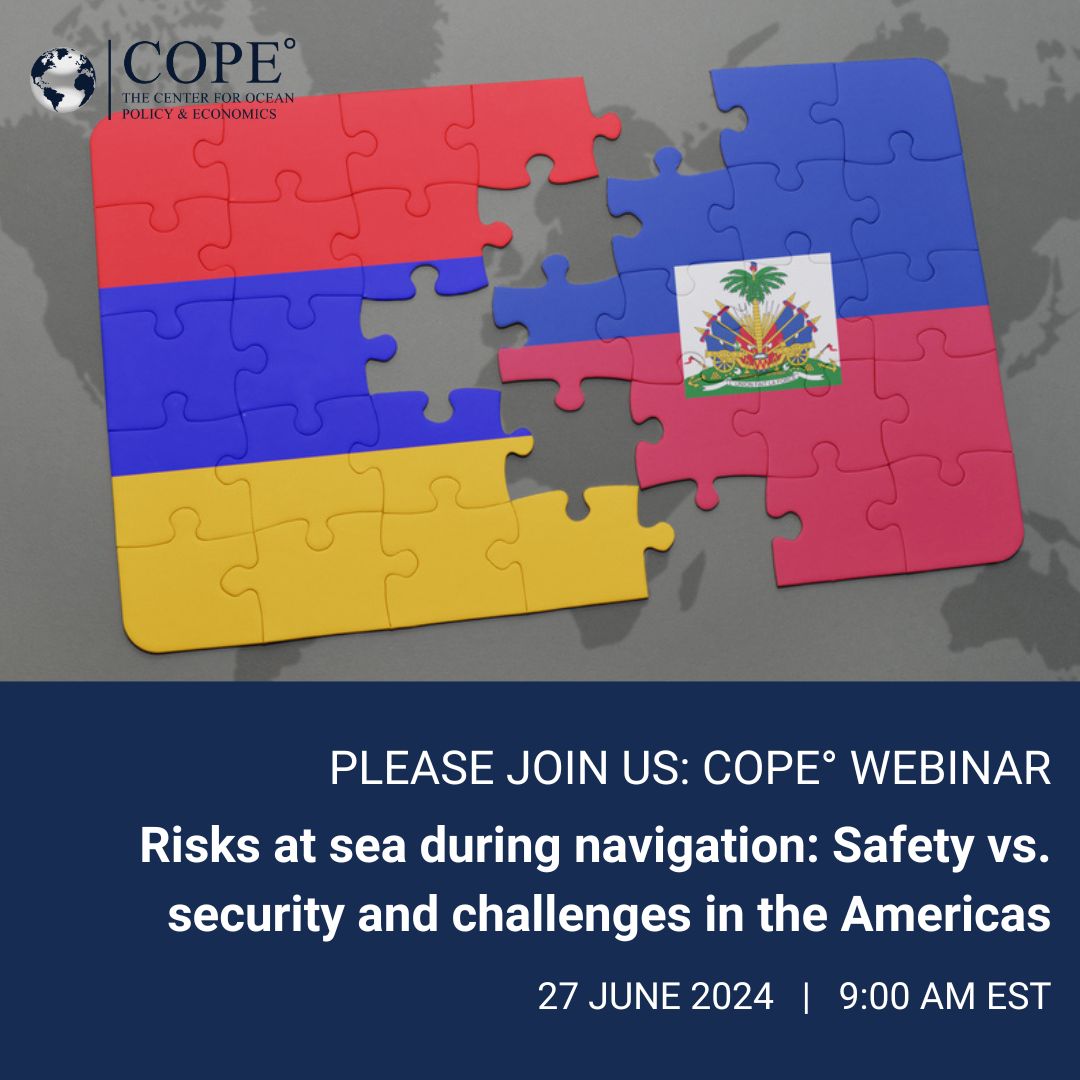
COPE° Webinar – Risks at sea during navigation: Safety vs. security and challenges in the Americas
COPE° WEBINAR
Risks at sea during navigation: Safety vs. security and challenges in the Americas
THURSDAY, 27 JUNE 2024 | 9:00 AM EST
COPE° held a virtual webinar titled “Risks at sea during navigation: Safety vs. security and challenges in the Americas” on 27 June 2024. The topics that were covered are as follows:
- Peace Through Prosperity: Normalizing peace and security through economic development
- Main situations affecting safe navigation in the Americas
- Pirates and terrorist attacks in the red sea: implications beyond Europe
- Estrategias de Protección Marítima en la región latinoamericana
- Aspectos técnicos relevantes para mejorar la seguridad marítima en el caribe
- Buenas prácticas, contratos y optimización de la seguridad marítima
Participants
Javier Franco
Director, Logistics and Supply Chain Observatory Universidad Externado / Franco & Abogados / COPE° Fellow
Eric R. Dawicki
President and CEO, Northeast Maritime Institute
Jakob P. Larsen
BIMCO / COPE° Fellow
Kristina Siig
Scandinavian Institute of Maritime Law
Lisbeth Laurie
Organization of American States CICTE
Mauricio Ochoa
Maritime Expert
Webinar Recording
Webinar Q&A
Do you think there could be any link between Houthi- and Somali-based piracy, and why do you think piracy is now experiencing a surge?
Kristina Siig:
I will have to underscore that I do not have certain information/primary data on this. However, it seems that the general understanding of this in the scientific community is that it is most likely due to operations such as Operation Prosperity Guardian, which has pulled resources out of the Gulf of Aden, where Somali-based piracy has normally occurred, and further North into the Red Sea.
In this way, the naval presence in the Gulf of Aden has decreased, resulting in a sort of “vacuum” that has been exploited by the pirates. However, whether this is the only reason or whether there is also a new situation on land in Somalia that has allowed for this re-surge, I do not know.
Related Documents
COPE° Project – Coasties: Thriving Together
The COPE° project Coasties Thriving Together functions as an independent action team comprised of volunteer Coast Guard veterans and serving survivors of military sexual and physical trauma. This project provides a platform for resource and information sharing and third-party external recommendations. This community of compassionate allies is dedicated to thriving, not just surviving. With core values of honor, respect, and devotion to thriving, the action team has created a vision to shape policy, identify gaps in governance and resources, call for accountability, and recommend innovation and inclusive solutions to help our own thrive after experiencing trauma.
The formation of this safe and secure platform for this community of survivors comes after CNN exposed a secret investigation into alleged sexual abuse at the U.S. Coast Guard Academy that uncovered a history of rapes, assault and other serious misconduct being ignored and, at times, covered up by high-ranking officials in June of 2023. Completed in June 2019, the probe’s findings, “Operation Fouled Anchor,” had been kept confidential by Coast Guard senior leadership as the findings focused on reports of sexual assault at the Academy between 1992 to 2006. Operations Fouled Anchor was launched in 2014 when an academy graduate claimed her allegations of rape from years earlier had never been investigated. While looking into the woman’s case, agents determined her allegations, and more than two dozen other reports of misconduct had essentially been buried by academy leaders. As they continued digging, they unearthed more than 90 potential assaults from the late 1980s to 2006.
The COPE° project Coasties Thriving Together functions as an independent action team comprised of volunteer Coast Guard veterans and serving survivors of military sexual and physical trauma. This project provides a platform for resource and information sharing and third-party external recommendations. This community of compassionate allies is dedicated to thriving, not just surviving. With core values of honor, respect, and devotion to thriving, the action team has created a vision to shape policy, identify gaps in governance and resources, call for accountability, and recommend innovation and inclusive solutions to help our own thrive after experiencing trauma.
The formation of this safe and secure platform for this community of survivors comes after CNN exposed a secret investigation into alleged sexual abuse at the U.S. Coast Guard Academy that uncovered a history of rapes, assault and other serious misconduct being ignored and, at times, covered up by high-ranking officials in June of 2023. Completed in June 2019, the probe’s findings, “Operation Fouled Anchor,” had been kept confidential by Coast Guard senior leadership as the findings focused on reports of sexual assault at the Academy between 1992 to 2006. Operations Fouled Anchor was launched in 2014 when an academy graduate claimed her allegations of rape from years earlier had never been investigated. While looking into the woman’s case, agents determined her allegations, and more than two dozen other reports of misconduct had essentially been buried by academy leaders. As they continued digging, they unearthed more than 90 potential assaults from the late 1980s to 2006.
What is the most concerning is the apparent lack of interest or desire in looking at any sexual assaults prior to 1992. The Leadership Team unequivocally knows sexual assault, once women entered the Academy in 1976, has been occurring, yet no one in a leadership position is willing to acknowledge the historic significance of this. It is also possible that male survivors of harassment and assault live in the shadows from the shame long before 1976 and in the years since. Furthermore, no leaders have defined this as a systematic problem. With this in mind, the team stands Always Ready to shape policy, identify gaps in governance and resources, call for accountability, and recommend innovative and inclusive solutions to help our own thrive after experiencing trauma. The Independent Action Team questions the trustworthiness and credibility of the Coast Guard, and Coast Guard Academy in fully caring for survivors of military sexual and physical trauma.
The Action Plan for Coasties will consist of four phases. Phase One consists of the team’s top interest of providing a safe, secure, and trusted site to communicate about a charged topic – sexual assault and sexual harassment, with the intentions to expand access to the site in phases, monitoring the success along the way. This phase will consist of Coast Guard Academy women and men survivors and those previously identified friends. As progress and success is monitored of Phase One, the site will be opened to others in the Coast Guard with the Team’s ultimate goal to make the site available to all Coast Guard women and men, officers and enlisted.
Phase Two currently consists of opening the actions of Phase One to current and former members of the Coast Guard. Phase Three will begin with reviewing standing minutes, reports, and other relevant documents. Interviews will be conducted as appropriate as well as identifying gaps in data, policy, resources, and inequities so that recommendations can be provided to interested parties. Phase Four works to document the historical implications and lessons learned from what is discovered during the effort. With consent, oral or written histories will be provided to be included in scholarly academic research efforts. Additionally, non-attributional statements and other important historical documents will be preserved to not lose all aspects of the important historical nature of this time in Coast Guard History.
Currently in Phase One, the Action Team is continuing to build its community of survivors. While building the community, the team is also involved in an active Congressional outreach and letter writing campaign on issues paramount to survivors. This group currently consists of officers and enlisted members from varying accession sources.
More information about this team may be found on the Coasties Thriving Together page, which includes a form for those looking to request membership. Any questions, concerns, or comments may also be submitted to COPE° through our website.
COPE° Attends Houston Seminar on Tackling Drug Smuggling in the Maritime Industry
HOUSTON, TEXAS – COPE° attended a seminar on 9 January 2024 hosted at the U.S. Coast Guard Sector in Houston-Galveston, focusing on the collaborative efforts needed to combat drug smuggling on ships. Titled “Drug Smuggling in Ships: Fostering Law Enforcement and Trade Collaboration,” the event brought together key figures from law enforcement, trade, and maritime industries to address the challenges of this topic and to propose practical solutions. This seminar was a collaboration between COPE°, BIMCO, the International Organization of Airport and Seaport Police (INTERPORTPOLICE), the World Shipping Council, InterManager, and Northeast Maritime Institute.
In the Keynote Address, Bud Darr, Senior Vice-President of the Mediterranean Shipping Company, emphasized the necessity for increased collaboration between government and industry. Highlighting the cost associated with implementing technologies, he stressed the need for performance-based regulations. Darr advocated for a broader approach to collaboration, focusing on shared information, feedback, and tactics. He also addressed the broader societal impact of drug cartels and called for serious judicial repercussions.
Chris Trelawny, Deputy Secretary-General of INTERPORTPOLICE, presented on Fostering Law Enforcement/Trade Cooperation. In his presentation, Trelawny delved into achieving Sustainable Development Goal 16 in ports, promoting multi-stakeholder engagement, and viewing maritime security as a revenue generator. The session aimed to improve collaboration, decrease narcotics quantities, prevent seafarer abuse, and reduce ship detentions. Recommendations included increased threat information sharing, updating guidelines, and addressing the “us vs. them” mentality.
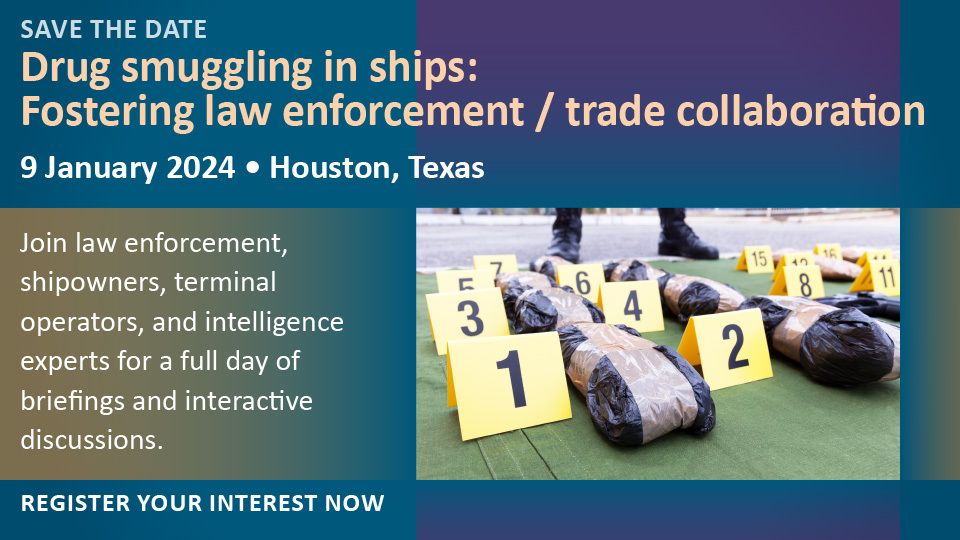
Session 1: Seafarers and Shipowners in Trouble, moderated by Jakob Larsen, Head of Maritime Safety & Security at BIMCO, focused on the challenges faced by seafarers and shipowners. Stories were recounted by multiple panelists of the unfairness of treatment of crews and captains pertaining to the unknown transportation of drugs on board ships and many highlighted the long periods of time taken to resolve these issues. This further brought up the topic of establishing a new culture of trust and whistleblowing within the industry.
In Session 2: Combatting Drug Trafficking in the Container and Liner Supply Chain, moderated by Dr. Ian Ralby, CEO of I.R. Consilium, speakers discussed technology enforcement, information sharing, and the need for comprehensive security systems. Attention was given to combating drug trafficking in the container and liner supply chain, including insights from key industry players.
Session 3: Obtaining and Utilizing Data, moderated by Chris Trelawny, focused on obtaining and turning data into actionable intelligence. Participants highlighted the importance of a data collection center, determining relevant information, and the need for standardized reporting. The emphasis was on sharing information about bad actors to enhance overall maritime security.
Finally, Session 4: Frontline Challenges and Practical Solutions, moderated by Joe Kramek, consisted of discussions about practical solutions to the comprehensive frontline challenge. The challenges faced by port facility security officers and vessel security officers were addressed, with an emphasis on clear communication and information flow. Various industry experts provided insights into security measures, audits of terminals, and diplomatic channels.
Chris Trelawny concluded the event by summarizing the key discussions and emphasizing the importance of sustained collaboration, reinforced communications, and coordinated actions. The need for global concern, private initiatives, and support from authorities was reiterated.
The event showcased a comprehensive approach to tackling drug smuggling, emphasizing collaboration, technology, and proactive measures to secure the maritime industry against criminal activities. With this in mind and an overall consensus for the need for greater collaboration, we feel that COPE° can provide a much-desired platform to facilitate more conversations on this issue. By hosting these discussions through COPE°’s Working Group on Peace and Justice: The Unjustified Criminalization of Mariners, we feel that much needed change of the guidelines and culture of this issue can be achieved. COPE° believes that with the momentum of this seminar, these important conversations can contribute to the protection of seafarers and societies against organized criminal networks specializing in drug smuggling.
Drug smuggling in ships: Fostering law enforcement / trade collaboration
There is a pressing need for international law that protects the rights of professional seafarers. Too many innocent seafarers are becoming victims of the activities of organized criminal drug trafficking groups and ill-considered law enforcement responses. The Center for Ocean Policy and Economics (COPE°) has teamed up with The International Organization of Airport and Seaport Police (INTERPORTPOLICE), BIMCO, InterManager, Northeast Maritime Institute, and key players from the maritime and law enforcement communities to consider ways forward.
BIMCO will be hosting a seminar in Houston on 9 January 2024. To register an interest in participating in this seminar, please click on the following link: SEMINAR REGISTRATION.
COPE° recognizes just how important this subject is and the dire need for action, which is why a Working Group has been established to work on future policy development related to this matter. Learn more about the Working Group, titled “Peace and Justice – The Unjust Criminalization of Seafarers,” HERE.
COPE° Attends the 23rd Session of APHoMSA
by Eva Lianne Veldkamp
The Center for Ocean Policy & Economics (COPE°) was invited by the Australian Maritime Administration to attend the 23rd session of the Asia-Pacific Heads of Maritime Safety Agencies (APHoMSA) forum, hosted in Sydney, Australia, from 5 to 8 June 2023.
During the forum, 26 countries were represented: Australia, Canada, Chile, China, Cook Islands, Fiji, Indonesia, Japan, Kiribati, Marshall Islands, Mongolia, Nauru, New Caledonia, New Zealand, Niue, Palau, Papua New Guinea, Republic of Korea, Singapore, Samoa, Solomon Islands, Timor Leste, Tonga, United States of America, Vietnam and Vanuatu. Nine observer organisations were also represented: the Asia-Pacific Economic Cooperation Seafarer Excellence Network (APEC SEN); the International Maritime Organization (IMO); the International Hydrographic Organization (IHO); the Regional Cooperation Agreement on Combating Piracy and Armed Robbery against Ships in Asia Information Sharing Centre (ReCAAP ISC); the Pacific Community (SPC); the Tokyo Memorandum of Understanding on Port State Control (Tokyo MoU), the Center for Ocean Policy and Economics (COPE°), the Pacific Islands Maritime Association (PacMA), and the Women’s International Shipping and Trading Association (WISTA Australia).
Covering half of the globe, the Asia-Pacific is the largest maritime region. While the lives and perspectives of people living near the Pacific Ocean is very specific, especially for those living on the many small islands in the Pacific, almost all of the topics that were discussed during the forum were of issues that concern us all.
Throughout the agenda items on ‘Women in Maritime’ and ‘Safety and Wellbeing of Seafarers,’ there was a lot of constructive dialogue on the importance of psychological safety in the maritime sector. The COPE° paper that was submitted to the forum under these agenda items resonated with many other delegations. The negative consequences that people face when simply being their authentic selves in their workplace indicates a lack of psychological safety.
Discussions were had around the need for people to feel safe and confident to speak up, share ideas, give honest feedback and communicate. The COPE° paper pointed out the importance of ‘Allyship’ – using your voice to speak up for others – especially in helping a minority. “When we can make it safe for everyone, we can get the people on board who know what to do, to take care of themselves, each other, the ship and the sea. And build maritime workforce globally, that is safe enough to be inclusive and diverse,” said Eva Lianne Veldkamp of COPE°.
The USA delegation shared information about a campaign to report sexual misconduct in the maritime sector, inviting all members of the forum to aggressively pursue acceptance of reports of sexual harassment and sexual assault (SASH) from mariners. “Barriers to reporting contribute to the problem of SASH because they limit the number of cases of sexual assault and sexual harassment reported to the authorities and allow perpetrators to avoid accountability.” Members of the forum supported and applauded this important campaign and noted the fear of reporting. Not only is there generally a high level of shame and fear that comes with vulnerability, but different cultural, social and personal aspects complicate these issues even further.
Other documents submitted under the ‘Women in Maritime’ agenda item provided useful information and resources, wonderful ideas for improvements and thought provoking suggestions. WISTA Australia submitted an informative paper with valuable resources and toolkits for companies to use to provide diverse and inclusive working environments and teams. Potential solutions to create a working environment that is safe, inclusive, diverse and equal for everyone in maritime have been put forward, especially to address the many challenges faced by women in the industry. To provide potential solutions, it is important to understand the gravity of the problems and challenges within the industry, and to understand that programs and solutions must be implemented with care and oversight.
One delegation of a small Pacific Island shared the experiences of a program that was initiated several years ago to promote maritime careers for women. It enabled three enthusiastic young women to become licensed mariners. Upon completion of their educations, they began work on a cruise ship. Unfortunately, the program turned out to be a tragedy. Two of the three women returned home pregnant and alone, with the third committing suicide. The program was terminated immediately.
The tragic story emphasizes the lack of, and need for, psychological safety on board ships and in the maritime sector. The COPE° paper noted that the absence of psychological safety is a root cause of bullying, assault and harassment in the maritime sector, including sexual assault and sexual harassment. It describes that feeling unsafe within one’s workplace is an invisible and underrated safety issue, and is something that has become normalized in the maritime sector and on board ships.
Discussions were also had about the need for mandatory training provisions on these issues, noting the great work that already has been taken forward by IMO as part of the comprehensive review of the STCW Convention and Code. There was also agreement amongst delegations to work on establishing international mechanisms, policies and measures to respond to, and resolve, cases of abuse, bullying and SASH.
In general, an optimistic understanding amongst all delegations indicated that there is a great willingness to use the severe challenges faced as opportunities for improvement. The forum decided to set up a correspondence group to work on agreements requiring action. In the upcoming period, this group is going to work on setting up a strategic plan on promoting women in maritime, developing leadership programs, creating a survey questionnaire to collect data on gender based issues on board of ships and on obtaining funding.
To summarize discussions under the agenda item of ‘Women in Maritime,’ Mr. Mick Kinley – CEO of the Australian Maritime Administration and Chair of the forum stated: “I think that we can all conclude to agree that psychological safety should be a basic human right.”
Another item on the agenda of the forum was ‘Marine Environment Protection and Maritime Incident response.’ There were several requests for cooperation and lessons learned shared by members of the forum. A number of marine incidents and SAR experiences were also shared and discussed. Several governments shared experiences and there was a great willingness for further collaboration across the Asia-Pacific.
Small Pacific Islands shared information about marine incidents which resulted in marine pollution. A big concern that was expressed was the lack of capacity to prosecute and compensate liability, clean up after pollution, remove wrecks and establish costs for use of assets needed to solve disasters. Statements were made about the need to hold shipowners and the maritime industry responsible for the damage on the ocean and the environment. Discussions were had around the idea that by making insurance costs public, those figures could provide helpful insight into the importance of investing to prevent incidents and marine disasters.
IMO shared information on the development of a new program and training course on marine incident investigations, which will be based on the work that is done by the relevant sub-committee (III) and the reports that are submitted by IMO Member States to GSIS. Australia noted a paper that was submitted to the IMO Legal Committee about updating liability limits in this regard, which seems to have received little support until now.
The forum provided a space for delegations to share information on sustainability development planning and the implications this has on maritime safety. Arrangements for vessel traffic services, aids of navigation and cooperation with government bodies to ensure safe and secure maritime traffic were also topics that made for engaging discussions. Offshore wind parks and other offshore developments such as seaweed farming and space launch operations require specific solutions that have yet to be discovered. Several delegations expressed a big need for information on how to handle situations at sea regarding innovative developments. Countries such as the USA, New Zealand, Canada and Australia are generally looking to Europe, as they have much experience with windfarms at sea.
New fuels were part of these discussions as well. China made an important remark about the safety issues and requirements regarding the use and carriage of large batteries on board ships. They requested IMO to notice these new and developing technologies, and update the conventions and regulations that are relevant to these new innovations accordingly as part of the review that already takes place. China stated that it will be necessary to establish new training requirements, safety inspections requirements and other provisions regarding the usage and carriage of batteries, new fuels or other innovative means in the near future.
The forum was very useful in regards to ‘Regional Cooperation.’ Discussions were had about the progress of the establishment of an IMO Regional Presence Office in the Pacific Islands region. The need for greater technical cooperation and an increase in the delivery of technical assistance was an important point of these discussions.
The importance of training, lecturing, coaching future maritime leaders and mariners and the need for assistance and cooperation was also expressed by several delegations. An challenge shared by many delegations is that of providing global on-board training to foster competent young seafarers. The pacific region has very bright and kind seafarers, but is currently unable to get them sea time on board international vessels.
By Eva Lianne Veldkamp
The Center for Ocean Policy & Economics (COPE°) was invited by the Australian Maritime Administration to attend the 23rd session of the Asia-Pacific Heads of Maritime Safety Agencies (APHoMSA) forum, hosted in Sydney, Australia, from 5 to 8 June 2023. The meeting was attended by Eva Lianne Veldkamp, who is currently leading a COPE working group on psychological safety, bullying and SASH in the maritime sector.
During the forum, 26 countries were represented: Australia, Canada, Chile, China, Cook Islands, Fiji, Indonesia, Japan, Kiribati, Marshall Islands, Mongolia, Nauru, New Caledonia, New Zealand, Niue, Palau, Papua New Guinea, Republic of Korea, Singapore, Samoa, Solomon Islands, Timor Leste, Tonga, United States of America, Vietnam and Vanuatu. Nine observer organisations were also represented: the Asia-Pacific Economic Cooperation Seafarer Excellence Network (APEC SEN); the International Maritime Organization (IMO); the International Hydrographic Organization (IHO); the Regional Cooperation Agreement on Combating Piracy and Armed Robbery against Ships in Asia Information Sharing Centre (ReCAAP ISC); the Pacific Community (SPC); the Tokyo Memorandum of Understanding on Port State Control (Tokyo MoU), the Center for Ocean Policy and Economics (COPE), the Pacific Islands Maritime Association (PacMA), and the Women’s International Shipping and Trading Association (WISTA Australia).
“It was truly special to be around so many maritime leaders from around the Pacific Ocean,” said Eva Lianne. “To have the opportunity to come together to talk and connect with people that carry responsibility to protect the ocean and the safety of people.”
Covering half of the globe, the Asia-Pacific is the largest maritime region. While the lives and perspectives of people living near the Pacific Ocean is very specific, especially for those living on the many small islands in the Pacific, almost all of the topics that were discussed during the forum were of issues that concern us all.
Throughout the agenda items on ‘Women in Maritime’ and ‘Safety and Wellbeing of Seafarers,’ there was a lot of constructive dialogue on the importance of psychological safety in the maritime sector. The COPE° paper that was submitted to the forum under these agenda items resonated with many other delegations. The negative consequences that people face when simply being their authentic selves in their workplace indicates a lack of psychological safety.
In her introduction statement, Eva expressed that all people should feel safe and confident to speak up, share ideas, give honest feedback and communicate. “Even in a hierarchical setting like we have on board, this should be normalized. Even making a simple comment about working clothes that don’t fit properly on a female body, is sometimes hard to express. Let alone speaking up about much more vulnerable and sensitive things like bullying and SASH.” The COPE° paper pointed out the importance of ‘Allyship’ – using your voice to speak up for others – especially in helping a minority. “When we can make it safe for everyone, we can get the people on board who know what to do, to take care of themselves, each other, the ship and the sea. And build maritime workforce globally, that is safe enough to be inclusive and diverse.”
The USA delegation shared information about a campaign to report sexual misconduct in the maritime sector, inviting all members of the forum to aggressively pursue acceptance of reports of sexual harassment and sexual assault (SASH) from mariners. “Barriers to reporting contribute to the problem of SASH because they limit the number of cases of sexual assault and sexual harassment reported to the authorities and allow perpetrators to avoid accountability.” Members of the forum supported and applauded this important campaign and noted the fear of reporting. Not only is there generally a high level of shame and fear that comes with vulnerability, but different cultural, social and personal aspects complicate these issues even further.
Other documents submitted under the ‘Women in Maritime’ agenda item provided useful information and resources, wonderful ideas for improvements and thought provoking suggestions. WISTA Australia submitted an informative paper with valuable resources and toolkits for companies to use to provide diverse and inclusive working environments and teams. Potential solutions to create a working environment that is safe, inclusive, diverse and equal for everyone in maritime have been put forward, especially to address the many challenges faced by women in the industry. To provide potential solutions, it is important to understand the gravity of the problems and challenges within the industry, and to understand that programs and solutions must be implemented with care and oversight.
One delegation of a small Pacific Island shared the experiences of a program that was initiated several years ago to promote maritime careers for women. It enabled three enthusiastic young women to become licensed mariners. Upon completion of their educations, they began work on a cruise ship. Unfortunately, the program turned out to be a tragedy. Two of the three women returned home pregnant and alone, with the third committing suicide. The program was terminated immediately.
“This severely mournful story indicates what is currently is lacking in many teams and organizations, including those on board of ships and in maritime sector: psychological safety,” Eva pointed out in response. The COPE° paper noted that the absence of psychological safety is a root cause of bullying, assault and harassment in the maritime sector, including sexual assault and sexual harassment. It describes that feeling unsafe within one’s workplace is an invisible and underrated safety issue, and is something that has become normalized in the maritime sector and on board ships.
Discussions were also had about the need for mandatory training provisions on these issues, noting the great work that already has been taken forward by IMO as part of the comprehensive review of the STCW Convention and Code. There was also agreement amongst delegations to work on establishing international mechanisms, policies and measures to respond to, and resolve, cases of abuse, bullying and SASH.
Eva shared an interesting observation. “Several people pointed out that currently many ships are old, outdated and not safe to work on in general. It was also noted that many seafarers are in need of secure employment contracts that will hold and protect their needs and interests.”
In general, an optimistic understanding amongst all delegations indicated that there is a great willingness to use the severe challenges faced as opportunities for improvement. The forum decided to set up a correspondence group to work on agreements requiring action. In the upcoming period, this group is going to work on setting up a strategic plan on promoting women in maritime, developing leadership programs, creating a survey questionnaire to collect data on gender based issues on board of ships and on obtaining funding.
To summarize discussions under the agenda item of ‘Women in Maritime,’ Mr. Mick Kinley – CEO of the Australian Maritime Administration and Chair of the forum stated: “I think that we can all conclude to agree that psychological safety should be a basic human right.”
Another item on the agenda of the forum was ‘Marine Environment Protection and Maritime Incident response.’ There were several requests for cooperation and lessons learned shared by members of the forum. A number of marine incidents and SAR experiences were also shared and discussed. “It was very interesting to observe how governments and authorities around the Pacific are working together to keep the ocean clean and safe,” Eva noted. Several governments shared experiences and there was a great willingness for further collaboration across the Asia-Pacific.
Small Pacific Islands shared information about marine incidents which resulted in marine pollution. A big concern that was expressed was the lack of capacity to prosecute and compensate liability, clean up after pollution, remove wrecks and establish costs for use of assets needed to solve disasters. Statements were made about the need to hold shipowners and the maritime industry responsible for the damage on the ocean and the environment. “Insurers keep the total cost a secret, but this would provide a good insight on the importance of investing in prevention of incidents and marine disasters.”
IMO shared information on the development of a new program and training course on marine incident investigations, which will be based on the work that is done by the relevant sub-committee (III) and the reports that are submitted by IMO Member States to GSIS. Australia noted a paper that was submitted to the IMO Legal Committee about updating liability limits in this regard, which seems to have received little support until now.
Lastly, Eva noted that the cause of the marine incidents had to do with a lack of understanding and/or feeling of responsibility from the people working on the bridge. “This is an important observation, together with the earlier conclusion that many working environments on board of ships are not psychologically safe.”
The forum provided a space for delegations to share information on sustainability development planning and the implications this has on maritime safety. Arrangements for vessel traffic services, aids of navigation and cooperation with government bodies to ensure safe and secure maritime traffic were also topics that made for engaging discussions. Offshore wind parks and other offshore developments such as seaweed farming and space launch operations require specific solutions that have yet to be discovered. Several delegations expressed a big need for information on how to handle situations at sea regarding innovative developments. Countries such as the USA, New Zealand, Canada and Australia are generally looking to Europe, as they have much experience with windfarms at sea.
New fuels were part of these discussions as well. China made an important remark about the safety issues and requirements regarding the use and carriage of large batteries on board ships. They requested IMO to notice these new and developing technologies, and update the conventions and regulations that are relevant to these new innovations accordingly as part of the review that already takes place. China stated that it will be necessary to establish new training requirements, safety inspections requirements and other provisions regarding the usage and carriage of batteries, new fuels or other innovative means in the near future.
The forum was very useful in regards to ‘Regional Cooperation.’ Discussions were had about the progress of the establishment of an IMO Regional Presence Office in the Pacific Islands region. The need for greater technical cooperation and an increase in the delivery of technical assistance was an important point of these discussions.
The importance of training, lecturing, coaching future maritime leaders and mariners and the need for assistance and cooperation was also expressed by several delegations. An challenge shared by many delegations is that of providing global on-board training to foster competent young seafarers. The pacific region has very bright and kind seafarers, but is currently unable to get them sea time on board international vessels.
Eva invited all countries and organizations to join the Center for Ocean Policy & Economics (COPE°) and influence change together. COPE° provides a safe, digital platform for people to come together as a community to work to find salient solutions and action change. Learn more about COPE° at www.thecope.org.