Uncategorized

BEYOND COMPLIANCE: WHY MARITIME GOVERNANCE MUST WORK IN THE REAL WORLD

Beyond Compliance: Why Maritime Governance Must Work in the Real World

Paper by Captain James Foong, MBA, FNI, FCILT, FCMI

24 November 2026

A ship can carry valid certificates, have its procedures in order and pass an inspection, yet still place its crew in circumstances where making the right decision is unnecessarily difficult.

That is an uncomfortable proposition for an industry built on standards. It is also one that deserves attention.

In two decades of international shipping, including shipboard operations and shore-based auditing, I have seen the value of well-designed rules. I have also become convinced that our understanding of good governance cannot end with proof that a rule has been followed.

Compliance is essential. It is not the same thing as effectiveness.

WHEN A RULE REACHES THE SHIP

The International Maritime Organization (IMO) and International Labour Organization (ILO) have given shipping a common foundation. SOLAS sets core safety requirements (International Maritime Organization [IMO], 1974). The International Safety Management (ISM) Code places structured risk management at the centre of company operations (IMO, 1993). The Maritime Labour Convention (MLC, 2006) addresses seafarers’ conditions of employment and life onboard (International Labour Organization (ILO), 2006), while STCW establishes internationally recognised standards for training and watchkeeping (IMO, 1978).

We should not diminish these achievements. Without internationally agreed requirements, the challenges of operating across borders would be far greater.

Yet an international requirement eventually becomes a decision made by a person: a master deciding whether conditions permit a safe departure, a chief officer balancing cargo operations with rest, or a chief engineer deciding whether a defect can be managed safely until assistance is available.

Consider a seafarer who has spent many hours travelling through airports, crossing time zones and waiting for transport before joining a vessel facing an immediate turnaround. The work-and-rest records may be properly maintained from the point of joining, but those records alone cannot establish that the person is ready for a demanding handover. The IMO’s Guidelines on Fatigue recognise the wider causes of fatigue and the need to manage the resulting risks (IMO, 2019).

The point is not that such an arrangement necessarily violates a convention. It is that a technically compliant arrangement can still deserve a second look from an operational risk perspective.

THE DIFFERENCE BETWEEN CLOSING A FINDING AND FIXING A PROBLEM

The same question arises in auditing. A finding is raised. Corrective action is recorded. Evidence is uploaded. The item is closed.

But what actually changed?

Did the company remove the underlying pressure, improve the handover, clarify who has authority to stop an operation, or give the crew a realistic way to report a recurring concern? If the only visible
outcome is another signature, we should hesitate before declaring success.

This is not an argument against audits or documentation. On the contrary, a credible audit should be capable of distinguishing a system that looks orderly from one that consistently supports safe
decisions. The IMO’s Casualty Investigation Code similarly reflects the importance of learning from incidents to prevent recurrence (IMO, 2008).

The difficulty is that responsibility in shipping is often distributed. A demanding turnaround may result from a commercial commitment made ashore; a local port constraint may be poorly
communicated; a crew concern may be acknowledged without being resolved. By the time the risk becomes visible onboard, no single decision-maker owns the complete chain.

When something goes wrong, identifying the last person involved is easier than examining how the organisation made that person’s choices harder. Effective governance must be willing to look further upstream.

A GLOBAL SYSTEM WITH LOCAL CONSEQUENCES

UNCTAD’s Review of Maritime Transport 2025 describes a shipping system challenged by geopolitical disruption, rerouting and uncertainty (UN Trade and Development (UNCTAD), 2025). Those pressures are discussed at government and boardroom level, but they ultimately materialise in voyage plans, port schedules, crew workloads and operational decisions.

The regulatory landscape is equally international. Under Article 94 of UNCLOS, flag States have duties concerning ships flying their flags (United Nations, 1982). Port State control adds oversight of foreign ships visiting ports, with the IMO’s Procedures for Port State Control, 2025 providing guidance for inspections (IMO, 2025b). The ISPS Code further illustrates the need for coordination between governments, ships and port facilities (IMO, 2002).

Each institution has a legitimate role. The challenge is that standards can be interpreted, resourced and enforced differently across jurisdictions. What appears straightforward in a meeting can become ambiguous when a vessel has to satisfy several authorities within a short port stay.

These differences do not automatically indicate negligence or bad faith. They can reflect different legal systems, capabilities and local conditions. But inconsistency has a cost, and much of that cost is borne by crews who have little influence over the decisions that create it.

Diplomacy in maritime affairs should therefore be judged not only by the agreements we sign, but also by how coherently those agreements are implemented. The IMO Member State Audit Scheme, designed to assess the implementation of applicable IMO instruments, is an important acknowledgment of that responsibility (IMO, 2025a).

WHAT I WOULD CHANGE

I would start with three priorities.

First, bring serving mariners into policy development earlier. Consultation cannot be a formality held after the essential decisions have been made. Masters, engineers, deck officers and ratings
understand the ship–shore interface in ways that are difficult to capture through committee papers alone. Their experience should test whether a proposed requirement is workable before it becomes another obligation.

Second, judge corrective action by results. An audit finding should not be considered truly resolved merely because a procedure has been revised. We should ask whether the risk has decreased, whether the improvement survives the next port call and whether those doing the work agree that it helped. That requires follow-up, evidence and professional curiosity, not simply more forms.

Third, make accountability clearer across organisational boundaries. Shipping companies, charterers, ports and administrations all influence conditions onboard, even when their responsibilities differ. A safety concern that sits between two organisations should not be allowed to disappear between them. Clear escalation channels, realistic operating assumptions and visible management support for conservative safety decisions matter more than ambitious slogans.

None of these measures replaces compliance. Nor should shipboard experience be treated as a substitute for law, evidence or independent oversight. Professional judgment is valuable precisely when it is informed, supported and accountable.

THE TEST THAT MATTERS

We can measure certificates, inspections, closed findings and completed training. We should measure them. But they are indicators of a safety system, not its ultimate purpose.

The more demanding question is whether that system helps people make responsible decisions when schedules are tight, information is incomplete and commercial pressure is real.

For policymakers, the challenge is to write standards that are both rigorous and usable. For companies, it is to make the commitments in their safety policies credible at the point of operation. For those of us at sea, it is to raise problems clearly and exercise judgment responsibly.

Maritime governance succeeds when these responsibilities reinforce one another. It fails when each party can demonstrate compliance while the practical risk remains untouched.

The certificate is important. What happens after it has been issued matters more.
ABOUT THE AUTHOR

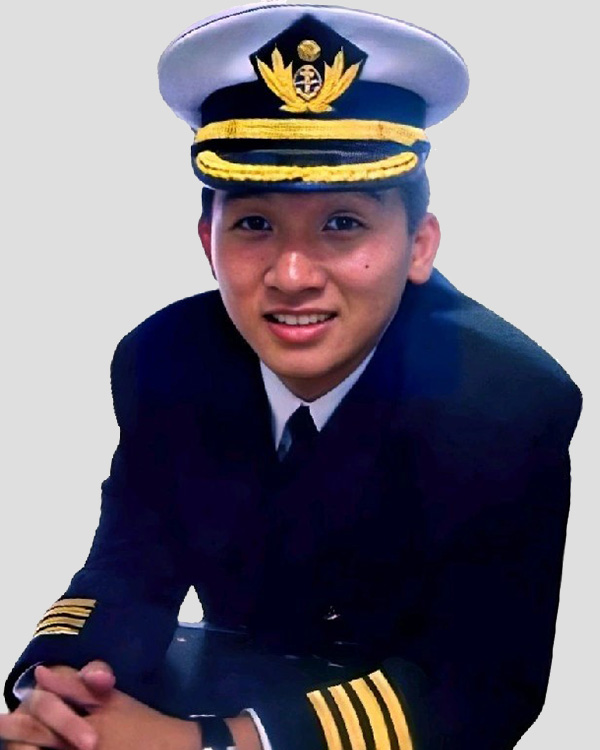
Captain James Foong is a New Zealand-trained Master Mariner with two decades of experience in international shipping and shore-based maritime auditing. He is a Fellow of The Nautical Institute UK, a Chartered Fellow of CILT Malaysia, a Fellow of the Chartered Management Institute Malaysia, and a Fellow of the Center for Ocean Policy and Economics (COPE°). His research interests include maritime governance, port strategy and supply chain resilience across Asia.

References

For questions or comments, please email [email protected].

BEYOND COMPLIANCE: WHY MARITIME GOVERNANCE MUST WORK IN THE REAL WORLD Read More »
The High Seas Treaty: From Agreement to Implementation

The High Seas Treaty: From Agreement to Implementation

With the High Seas Treaty now in force and its first Conference of the Parties approaching, the international community faces a critical question: how can a landmark agreement become an effective, equitable, and workable system of ocean governance?

Paper by the COPE° Editorial Team

18 November 2026

A New Chapter in Ocean Governance

The world’s oceans connect economies, support international commerce, regulate the climate, and sustain ecosystems essential to life on Earth. Yet much of this environment lies beyond the jurisdiction of any single nation, making its effective management a shared international responsibility.

The high seas, which cover approximately two-thirds of the ocean’s surface, have long been governed through a combination of international agreements and specialized organizations. While these arrangements regulate activities such as shipping and fishing, gaps remain in how marine biodiversity is protected across national boundaries. The High Seas Treaty, formally known as the Agreement on the Conservation and Sustainable Use of Marine Biological Diversity of Areas Beyond National Jurisdiction (BBNJ Agreement), seeks to address these gaps.

Adopted by the United Nations in June 2023, the treaty entered into force on January 17, 2026. As of November 2026, 105 parties have joined the agreement, marking a significant milestone in international ocean cooperation. (United Nations, 2023.; United Nations Treaty Collection, n.d.) However, bringing a treaty into force is only the beginning. Its long-term significance will depend on whether participating nations can establish functioning institutions, coordinate existing regulations, and translate international commitments into meaningful improvements in ocean management.

With the first Conference of the Parties (COP1) approaching in January 2027, attention is shifting from what the treaty promises to how those promises will be delivered.

What Does the Treaty Actually Do?

The BBNJ Agreement builds upon the United Nations Convention on the Law of the Sea (UNCLOS), the principal international legal framework governing maritime activities and ocean resources. Rather than replacing existing maritime regulations, it introduces additional mechanisms to conserve and sustainably use marine biodiversity in areas beyond national jurisdiction.

The treaty addresses four principal areas:

  1. Marine genetic resources: Establishing arrangements for sharing benefits associated with genetic material from marine organisms, including potential scientific and commercial applications.
  2. Marine protected areas: Creating procedures to establish protected areas and other management measures in international waters to conserve vulnerable ecosystems.
  3. Environmental impact assessments: Establishing requirements to assess certain activities that may significantly affect marine environments, helping countries make more informed decisions.
  4. Capacity-building and technology transfer: Supporting developing nations through scientific cooperation, technical assistance, and access to marine technologies.

Together, these provisions create new opportunities for international cooperation. They also raise important questions about financing, administration, enforcement, and how new requirements will interact with existing maritime activities. (United Nations, 2023; International Maritime Organization, 2026.) The treaty provides a framework for addressing these issues, but many of the procedures needed to make that framework operational must still be established.

From International Agreement to Practical Action

Throughout 2026, countries have been preparing the institutional foundations necessary to implement the treaty. The third session of the United Nations Preparatory Commission, held from March 23 to April 2, 2026, addressed financial arrangements, decision-making procedures, scientific support, and the structure of the treaty’s governing institutions. Although progress was made, several issues remain unresolved, including elements of the financial rules, procedures for decision-making, and the future Secretariat’s institutional arrangements. These matters will require further consideration at COP1. (Tsioumanis & Calabretta, 2026; Burger & Northrop, 2026.)

International participation has also continued to expand. The United Kingdom ratified the agreement in July 2026, while Australia and Canada joined in September. Regional cooperation has intensified as well. In October, representatives of the Caribbean Community (CARICOM) met in The Bahamas to coordinate preparations for COP1, emphasizing the importance of meaningful participation by smaller and developing nations (United Nations Treaty Collection, n.d.; Caribbean Community, 2026.)

These developments demonstrate growing international engagement. However, the most consequential work now concerns how the treaty will function. Who will be responsible for implementing its provisions? How will decisions be made? What financial resources will be available, and how will they be distributed? How will governments and international institutions determine whether the treaty is achieving its objectives? The answers will shape both the agreement’s effectiveness and the confidence of those expected to participate in its implementation.

The Challenge of Governing a Shared Ocean

One of the most complex aspects of implementing the High Seas Treaty is the number of organizations already responsible for managing maritime activities. The International Maritime Organization (IMO) oversees international shipping standards. Regional fisheries management organizations regulate fisheries within their respective mandates. The International Seabed Authority governs mineral-related activities in the international seabed Area. These institutions possess established expertise and regulatory frameworks, but their responsibilities can intersect with broader environmental concerns.

Consider a proposed marine protected area that overlaps with an international shipping route. Scientists might identify the area as an important habitat for vulnerable marine species, while shipping operators may depend on the route to move goods efficiently between major ports. Protecting the area could involve changing vessel traffic patterns or introducing additional operational measures. However, those decisions would require cooperation among participating governments, the IMO, scientists, and affected maritime stakeholders.

A measure developed without considering existing shipping regulations might create overlapping requirements. Conversely, a proposal that fails to account for the area’s ecological importance could miss an opportunity for meaningful conservation. The objective should be to identify measures that address the environmental concern while remaining workable within existing regulatory and operational systems.

The treaty recognizes these complexities and requires cooperation with relevant international organizations without undermining their existing responsibilities. In January 2026, the IMO welcomed the treaty’s entry into force and affirmed its willingness to support implementation within its established mandate. (International Maritime Organization, 2026.) Effective ocean governance will depend not on creating more regulation for its own sake, but on ensuring that institutions work together, responsibilities are clear, and decisions achieve their intended results.

Protecting the Ocean While Supporting Sustainable Maritime Activity

The ocean supports international trade, commercial fishing, scientific research, tourism, and emerging marine industries. These activities depend on healthy ecosystems, but they also require predictable regulatory frameworks and economically viable operating conditions. Environmental protection and economic development should therefore not automatically be treated as opposing objectives.

Marine conservation can support the long-term sustainability of ocean-dependent industries, while maritime activity can contribute valuable expertise, resources, and technological capabilities to conservation efforts. The challenge lies in developing policies that recognize these relationships.

For example, a marine protected area should be established using credible scientific evidence, clearly defined conservation objectives, and consultation with affected stakeholders. Its effectiveness should then be evaluated through monitoring and periodic review. Similarly, environmental impact assessments should provide meaningful information about potential harm without introducing unnecessary duplication or administrative complexity.

These considerations do not diminish the importance of environmental protection. They recognize that even well-intentioned policies can fall short when implementation costs, institutional capacity, or operational realities are overlooked. Ultimately, success should be measured by the outcomes achieved: healthier marine ecosystems, more sustainable resource use, and improvements in how ocean activities are managed.

Ensuring All Nations Can Participate

The High Seas Treaty also raises important questions about fairness and institutional capacity. Countries differ considerably in their access to funding, scientific expertise, technology, and administrative resources.

For Small Island Developing States (SIDS), these differences are especially significant. Many depend heavily on fisheries, maritime trade, tourism, and healthy ocean ecosystems, yet may lack the resources needed to conduct extensive marine research or maintain a continuous presence in international negotiations. The treaty seeks to address these disparities through provisions supporting financial assistance, capacity-building, and marine technology transfer.

However, the effectiveness of these commitments will depend on their implementation. Financial mechanisms must be transparent and accessible. Scientific cooperation should respond to the needs of participating countries, while technical assistance should strengthen their long-term capabilities. The 2026 preparatory negotiations illustrated the difficulties involved in establishing these arrangements, particularly regarding the treaty’s financial architecture. (Tsioumanis & Calabretta, 2026; Burger & Northrop, 2026.)

For developing nations, meaningful participation requires more than representation at international meetings. It requires the ability to contribute to decisions, implement agreed measures, and benefit from the scientific and economic opportunities associated with sustainable ocean management. Without adequate resources and institutional support, the gap between international commitments and national capabilities could become a significant obstacle to the treaty’s success.

What Happens Next? COP1 and the Road Ahead

The next major milestone is the first Conference of the Parties (COP1), scheduled for 11-22 January 2027, at United Nations Headquarters in New York. COP1 will mark the first formal meeting of the treaty’s governing body and an important transition from preparatory negotiations to operational decision-making.

Participating countries will consider several foundational issues:

  • Institutional arrangements: Countries must determine how the treaty’s governing bodies, Secretariat, and supporting committees will function. These decisions will shape how responsibilities are assigned and how efficiently the agreement can operate.
  • Decision-making procedures: The adoption of rules of procedure will help establish how countries participate in negotiations, reach decisions, and resolve outstanding disagreements.
  • Financial arrangements: Governments will need to address how the treaty’s institutions are funded and how financial mechanisms can support implementation, particularly for developing countries.
  • Scientific and technical cooperation: Establishing the bodies and procedures necessary to provide scientific advice will help ensure future conservation and management decisions are informed by reliable evidence.

These are not simply administrative matters. They will influence how quickly the treaty becomes operational, how accessible its institutions are, and whether countries can implement its provisions effectively. (Tsioumanis & Calabretta, 2026; United Nations, n.d.)

Upcoming Milestones

Several important dates are approaching:

  • 12 December 2026: Deadline for states seeking to participate as parties from the opening of COP1 to deposit their instruments of ratification, approval, acceptance, or accession.
  • 18 December 2026: Registration deadline for eligible non-governmental observers seeking to attend COP1.
  • 11-12 January 2027: COP1’s High-Level Segment, providing an opportunity for senior government representatives to address the agreement’s implementation.
  • 11-22 January 2027: COP1 will consider the institutional, procedural, and financial arrangements needed to begin putting the treaty into operation (United Nations, n.d.; United Nations, Division for Ocean Affairs and the Law of the Sea, n.d.)

Following COP1, attention will increasingly turn toward making the treaty’s institutions operational, implementing its information-sharing mechanisms, supporting scientific cooperation, and developing processes through which future conservation measures can be considered. The pace of this work will depend on the decisions reached by participating countries and the resources available to carry them out.

What Should We Be Watching?

For governments, maritime industries, researchers, and the wider public, four questions will be particularly relevant as implementation progresses.

Will the treaty strengthen cooperation among existing maritime institutions?
Clear responsibilities and coordination will be necessary to prevent overlapping requirements and ensure that conservation measures complement established regulatory systems.

Will environmental measures be scientifically credible and operationally feasible?
Decisions must account for environmental priorities, available evidence, and the practical implications for affected activities.

Will developing nations have the resources to participate meaningfully?
Financing, technology transfer, and capacity-building will influence whether countries can fulfill their obligations and help shape future decisions.

How will success be measured?
Transparent reporting, scientific monitoring, and periodic evaluation will be essential to determining whether the treaty produces lasting improvements.

These questions extend well beyond diplomatic negotiations. The decisions made under the treaty may influence how marine resources are managed, how scientific research is conducted, and how maritime industries operate for years to come.

Beyond the Agreement: Building an Effective System of Ocean Governance

The High Seas Treaty represents a significant achievement in international cooperation. Its adoption and entry into force demonstrate that countries can reach agreement on complex issues involving environmental protection, economic interests, and shared resources. But the next phase requires a different kind of cooperation. Negotiating common principles is not the same as establishing institutions that function effectively, allocating resources fairly, or ensuring that policies achieve measurable results.

As governments prepare for COP1, the challenge is to create a system that can respond to environmental concerns while recognizing the realities of maritime activity and the differing capabilities of participating nations. That means making use of existing institutional expertise, grounding decisions in credible science, engaging affected stakeholders, and ensuring that obligations are matched by the capacity to fulfill them.

It also means accepting that successful ocean governance will require continuous evaluation and adaptation. Marine ecosystems, scientific understanding, technologies, and maritime industries will continue to evolve, and the institutions established under the treaty must be capable of responding. The decisions made at COP1 will not resolve every challenge facing international ocean governance, but they will establish important foundations for how those challenges are addressed.

The lasting significance of the High Seas Treaty will ultimately depend on whether it helps countries move beyond shared ambitions toward coordinated action, stronger institutions, and demonstrable improvements in the management of the world’s oceans.

References

For questions or comments, please email [email protected].

The High Seas Treaty: From Agreement to Implementation Read More »

Introducing COPE°’s New Content Initiative: Exploring the Issues Shaping Our Maritime Future

Introducing COPE°'s New Content Initiative: Exploring the Issues Shaping Our Maritime Future

A new approach to sharing perspectives, encouraging dialogue, and exploring the challenges and opportunities facing the global maritime community.

5 November 2026

At the Center for Ocean Policy and Economics (COPE°), we believe that meaningful progress begins with informed discussion, diverse perspectives, and a willingness to ask important questions. Equally important is a commitment to approaching complex challenges pragmatically, recognizing the realities that shape decision-making and seeking practical pathways toward meaningful solutions.

As we continue to expand our work and strengthen engagement across our network of Fellows and industry partners, we are introducing a new approach to content development. Moving forward, COPE° will dedicate each two-month period to exploring one of our six Areas of Influence, creating opportunities for more focused discussions on the issues shaping the maritime industry and our oceans.

Through articles, interviews, expert commentary, and other contributions, we hope to bring a wider range of voices into these conversations, examine complex issues from different perspectives, and encourage constructive dialogue that can lead to meaningful solutions.

Exploring COPE°'s Six Areas of Influence

COPE°’s work spans six interconnected Areas of Influence, each addressing important aspects of the global maritime community. Our new content calendar will follow a rotating schedule, allowing us to spend two months exploring each area in greater depth:

Examining the economic opportunities and challenges facing maritime industries and coastal communities, including workforce development, investment, infrastructure, and the growth of the blue economy.

Learn more about this COPE° Area of Influence: Economic Development

Exploring the evolving relationship between maritime operations, energy production, environmental responsibility, and the transition toward more sustainable practices.

Learn more about this COPE° Area of Influence: Energy & Sustainability

Addressing the health of our oceans and marine ecosystems, including conservation, pollution, biodiversity, and the policies that influence how we protect and manage marine resources.

Learn more about this COPE° Area of Influence: Ocean Ecology

Highlighting emerging technologies, research, and new approaches that have the potential to transform maritime operations, strengthen safety, and address longstanding industry challenges.

Learn more about this COPE° Area of Influence: Innovation & Technology

Examining the systems, policies, and economic forces that support global maritime trade, including shipping, ports, logistics, and international commerce.

Learn more about this COPE° Area of Influence: Maritime Trade & Commerce

Exploring the international relationships, legal frameworks, security considerations, and policy decisions that influence the maritime world.

Learn more about this COPE° Area of Influence: Diplomacy & International Affairs

Although each period will feature a primary Area of Influence, COPE° will continue to address important developments across all six areas throughout the year. Many of today’s most pressing maritime challenges are interconnected, and our goal is to encourage conversations that recognize those connections.

Encouraging New Perspectives and Meaningful Dialogue

A central part of this initiative is creating more opportunities for COPE° Fellows and other subject matter experts to share their knowledge, experiences, and perspectives.

Our Fellows bring expertise from across maritime operations, international law, public policy, environmental conservation, education, technology, and many other disciplines. By bringing these perspectives together, we hope to explore not only the challenges facing our industry, but also the circumstances, decisions, and competing interests that influence them.

Content will take a variety of forms, including written articles, short commentary pieces, interviews, and discussions featuring multiple perspectives.

We are particularly interested in exploring questions that do not always have straightforward answers. What are the underlying causes of a particular challenge? How do policies and decisions affect different stakeholders? What approaches are working, where are the gaps, and what could be done differently?

Our objective is not simply to share information, but to encourage thoughtful, nonpartisan discussions that help move important issues forward.

COPE°'s Journey Toward a More Pragmatic Approach

As COPE° continues to evolve, we are placing an increasing emphasis on pragmatism as a guiding principle in how we approach complex maritime and ocean challenges.

Many of the issues facing the global maritime community do not have simple solutions. They involve competing priorities, differing national interests, regulatory constraints, economic realities, and perspectives that are not always easy to reconcile. Addressing these challenges requires more than identifying what should change. It requires understanding what is realistically possible, what barriers exist, and how meaningful progress can be achieved.

Our approach is grounded in the belief that productive dialogue should be informed by evidence, experience, and a willingness to consider different points of view. We recognize that no single perspective holds all the answers, and that practical solutions often emerge through collaboration, thoughtful examination, and an openness to challenging existing assumptions.

For COPE°, being pragmatic does not mean compromising on important principles or avoiding difficult conversations. It means approaching those conversations constructively, recognizing the complexities involved, and remaining focused on identifying achievable paths forward.

This is a journey that will continue to shape how COPE° engages with its Fellows, partners, and the broader maritime community. Whether examining international policy, environmental challenges, emerging technologies, or maritime commerce, we will strive to connect informed discussion with practical considerations and opportunities for meaningful action.

Our goal is not simply to explore what ought to be done, but to help advance conversations about what can be done, how it can be accomplished, and who needs to be involved.

November & December: Diplomacy & International Affairs

We are beginning this initiative with a focus on Diplomacy & International Affairs, an area that plays a significant role in nearly every aspect of the global maritime industry.

The maritime world operates across national borders, connecting countries, economies, industries, and communities. International cooperation is essential to maintaining safe and efficient trade, protecting marine environments, addressing security concerns, and establishing the rules and standards that govern maritime activity.

Yet the international landscape is constantly evolving. Geopolitical tensions, changing trade relationships, maritime security threats, and differences in national priorities all influence how countries and organizations interact on the world’s oceans.

Over the next two months, COPE° will explore topics such as:

  • International maritime governance and the role of global institutions.
  • Geopolitical developments and their implications for maritime trade and security.
  • International maritime law, regulations, and their enforcement.
  • The protection and fair treatment of seafarers across international jurisdictions.
  • Maritime diplomacy and opportunities for greater international cooperation.
  • The challenges of balancing national interests with shared global responsibilities.

We look forward to featuring perspectives from COPE° Fellows and other experts who have worked directly in these areas.

Our goal is to encourage readers to look beyond the headlines, consider the broader implications of international developments, and engage with the questions that will shape the future of maritime policy and cooperation.

COPE° Areas of Influence

Strengthening maritime commerce, expanding trade opportunities, and supporting a resilient global maritime industry.

Protecting marine ecosystems through conservation, research, and innovative environmental solutions.

Advancing emerging technologies and innovative solutions to address maritime and ocean challenges.

Fostering international cooperation and informed policymaking on global maritime and ocean issues.

Promoting cleaner energy, sustainable practices, and environmental responsibility across the maritime sector.

Driving economic growth, workforce development, and new opportunities across maritime and ocean industries.

Join the Conversation

As this initiative develops, we hope COPE° will become an increasingly active forum for exchanging ideas, challenging assumptions, and exploring practical solutions to maritime challenges.

We welcome participation from our Fellows, industry professionals, researchers, policymakers, students, and others who have perspectives worth sharing.

Whether through contributing an article, participating in an interview, or joining a discussion, there are many ways to be part of the conversation.

We invite you to follow along as we begin our November and December exploration of Diplomacy & International Affairs and continue through all six Areas of Influence in the year ahead.

The maritime industry faces no shortage of complex challenges. By bringing the right people and perspectives together, we hope to contribute to better understanding, stronger collaboration, and more informed solutions.

For questions or comments, please email [email protected].

Introducing COPE°’s New Content Initiative: Exploring the Issues Shaping Our Maritime Future Read More »